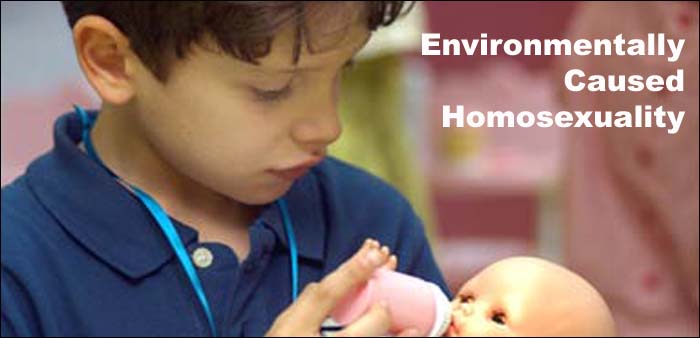
What Biological Theories of Homosexuality Cannot Explain

See the source image

What Biological Theories of Homosexuality Cannot Explain

James R. Aist

(Note: References are cited by number in parentheses and appear at the end of the article)

“Truth is not arrived at by wishful thinking or vacuous argument. It comes, instead, by careful examination of factual evidence.”

Since the early 1970s, gay activists have increasingly claimed that they were “born gay” and that, therefore, they could not change even if they wanted to. By repeating this claim over and over again for decades now, gay activists have managed to win over a large percentage of heterosexual “believers” to their cause, without any substantial basis in fact to validate the claim that they were “born that way.” “Born gay” is, in fact, a hoax of mammoth proportions. Therefore, it is necessary to examine carefully the facts concerning the origins and development of homosexuality to see if there is any truth at all to the “born gay” claim. Most of the relevant information can be grouped into two main categories: biological theories and social and environmental influences. The critical question is whether homosexuality is already determined at birth by biological factors and is immutable (unchangeable), or develops later as a result of post-natal experiences and influences during childhood.

There are several social and experiential factors that have been shown to play an important role in the development of homosexuality. Let’s take a quick look at a few of these post-natal factors, which cannot be explained by biological theories:

Childhood sexual abuse has been shown to be associated with the subsequent development of homosexuality in adulthood. Whitehead (8) lists eight relatively recent studies demonstrating this association. For example, in the article by Zeitsch, et al. (10), childhood sexual abuse was associated with an approximately two to three-fold increase in homosexuality in adulthood.

Divorce during childhood has also been shown to be associated with the development of homosexuality in adulthood, as evidenced by homosexual “marriage.” For example, men whose parents divorced before their sixth birthday were 39% more likely to “marry” homosexually than peers from intact parental marriages, and the figure for men whose cohabitation with both parents ended before age 18 years was in the range of 55%-76% (4). In a related study, Wells, et al., (7) found that cohabiting with two heterosexual, non-biological parents until the age of 16 was associated with a two-fold increase in homosexuality in adulthood, compared to cohabiting with both biological parents.

Urban versus rural environment. Whitehead and Whitehead (9) pointed out that the percentage of homosexuality in males reared in urban environments is 3.3 times that of males reared in rural environments, while the corresponding factor for homosexuality in females reared in urban environments is 2.3 times, indicating a very strong influence of the urban environment, as opposed to the rural environment, on the development of homosexuality.

Homosexual parents. Schumm (5) found that adults with a homosexual parent are 12 to 15 times as likely to self-identify as homosexual or bisexual as are adults without a homosexual parent, which indicates that post-natal environmental factors associated with having a homosexual parent (such as having a homosexual adult role model and unequivocal acceptance of homosexuality in the home) can play a major role in the development of a homosexual orientation. These results confirmed those of an earlier, much aligned (by gay activists), meta-analysis conducted by Cameron (3), and they suggest a very powerful post-natal influence on the development of homosexuality.

Therapy and Counseling Influences. Aist (1) reviewed and summarized some of the published information on religiously mediated and secularly mediated change in sexual orientation from homosexual to heterosexual. Numerous studies have shown that both religiously and secularly mediated change in sexual orientation occurs in highly motivated, dissatisfied homosexuals at a rate that is comparable to the success rates generally achieved by therapists and counselors for psychological disorders and behavioral problems, such as alcoholism. And many studies have found that, for the most part, these are long-term, stable shifts in sexual orientation. In fact, many ex-gays have been happily married with children for several-to-many years. What is the significance of these results relative to the claim that homosexual people are born gay? First, they confirm that pre-natal influences, including genes, do not dictate sexual orientation, because very significant change in sexual orientation has been achieved through therapy and counseling. Such change would not be possible if sexual orientation were fixed at birth. And second, the fact that therapy and counseling are successful at a rate that is comparable to the success rates generally achieved by therapists and counselors for psychological disorders and behavioral problems, such as alcoholism, confirms that any predisposition to homosexuality that may be present at birth is so weak that it can be nullified by subsequent intervention. Socarides (6) put it this way: “As psychoanalysts and psychotherapists, we are treating obligatory homosexuality successfully, changing sexual orientation from homosexual to heterosexual. Such a change would be unthinkable if there were any truth at all to the organic or biological or hereditary causation of homosexuality.”

It is virtually impossible to envision how prenatal mechanisms could explain these post-natal associations of increased or decreased homosexuality that correlates with social and experiential factors. But it is easy to envision how these factors could account for the two-thirds or more of post-natal influence on homosexuality that is revealed by the results of twin studies (2).

References Cited:

  1. Aist, J. 2012. Homosexuality: Good News!(click HERE)
  2. Aist, J. 2014. What Twin Studies Tell Us About Homosexuality: Nature vs. Nurture (click HERE)
  3. Cameron, P. 2006. Children of homosexuals and transsexuals more apt to be homosexual. Journal of Biosocial Science 38:413-418.
  4. Frisch, M. and A. Hviid. 2006. Childhood Family Correlates of Heterosexual and Homosexual Marriages: A National Cohort Study of Two Million Danes. Archives of Sexual Behavior 35:533-547.
  5. Schumm, W. 2010. Children of Homosexuals More Apt to be homosexuals? A Reply to Morrison and to Cameron Based on an Examination of Multiple Sources of Data. Journal of Biosocial Science 42:721-742.
  6. Socarides, C.W. 1995b. Exploding the myth of constitutional homosexuality. Narth Bulletin, Vol. III, Number 2, pages 17-18.
  7. Wells, J.E., et al. 2011. Multiple Aspects of Sexual Orientation: Prevalence and Sociodemographic Correlates in a New Zealand National Survey. Archives of Sexual Behavior 40:155-168.
  8. Whitehead, N. 2012. Book Review of Simon LeVay’s Gay, Straight and the Reason Why. (click HERE)
  9. Whitehead, N. and B. Whitehead. 2012. Chapter 2. The genetic implications of SSA population percentage. (click HERE)
  10. Zietsch, B., et al. 2012. Do Shared Etiological Factors Contribute to the Relationship between Sexual Orientation and Depression? Psychological Medicine 42:521-532.

(For more articles by Dr. Aist on homosexuality, click HERE.)
 

Forgiving as We Are Forgiven

See the source image

Forgiving as We Are Forgiven

 James R. Aist

 “And be kind to one another, tenderhearted, forgiving one another, even as God in Christ forgave you.” (Ephesians 4:32)

What does it mean to “forgive” someone, and how can we know that we have truly forgiven them? In Ephesians 4:32, we are instructed to forgive as God has forgiven us. So, answers to these questions can surely be found in an understanding of how God forgives us. Let’s go to the Scriptures to find out how God’s forgiveness of our sins is portrayed there.

First, let’s check out what Hebrews 10:16-18 has to say in this regard: “This is the covenant I will make with them after that time, says the Lord. I will put my laws in their hearts, and I will write them on their minds.” Then he adds: “Their sins and lawless acts I will remember no more.” And where these have been forgiven, sacrifice for sin is no longer necessary.” Here, we see clearly that “remember no more” is indeed referring to forgiven sins that no longer need a blood sacrifice (because Jesus paid the price for them with His own blood). But, it does not say that God cannot remember them (i.e., that He has amnesia); it says that He will not remember them (i.e., by choice). And Romans 4:8 says, “Blessed is the one whose sin the Lord will never count against them.” Once again, we see that it is God’s will at work here, not amnesia. And it clarifies the matter for us by explaining that the Lord will never “count our sins against us.” So, we see that when God says that He will “remember our forgiven sins no more”, He is not saying that He will forget them in the sense of amnesia, but that, by an overt act of His sovereign will, He will, intentionally, never again bring them to His mind and count them against us. That, in effect, blots them out from our “record” in heaven. That is what God requires of us: by an overt act of our will, we must resolve to stop bringing their sins to our mind and to stop holding them against him/her. And, when we do this, we are bringing ourselves into obedience with the “golden rule”, which commands us to “Do to others as you would have them do to you.” (Luke 6:31).

But, let’s not leave it at that. Let’s flesh this out a bit with more detail, so that we can get a better overall picture of what true forgiveness does and does not “look like” on the level of human experience. To do this, consider first what true forgiveness is not. It is not pretending that we cannot remember what was done to us. It is not pretending that the wrong done against us was not really wrong. It is not pretending that we were not offended. And it is not pretending that, when reminded of the offense, we don’t feel the same feelings as we did before. True forgiveness is honest and real. When we have forgiven someone, we no longer allow our minds to obsess with what they did. We no longer allow our minds to dwell on how we feel about it. We no longer allow ourselves to rehearse their sins in our mind, or to anyone else, to get sympathy or to avenge the wrongdoings. We do not allow ourselves to hope for anything bad to happen to them. We treat them with the respect, courtesy and honor that is due to everyone made in the image of God (i.e., everybody), even if we don’t feel like it. And we pray that God will bless them with all good things. In short, we follow the “golden rule” with respect to them, despite what they did and how we feel about it.

Having said that, let me insert a few caveats to try and balance out this brief treatment of forgiveness. First, forgiveness is often very difficult to accomplish, and it may take a long time to get there, so don’t give up when you fail in one aspect or another. Just ask God to forgive you, re-double your efforts and try to do better next time. Second, you may experience doubts that you have really forgiven. When that happens, consider whether or not you are doing what forgiveness looks like. If you are not, then you have more work to do. If, however, you are doing what forgiveness looks like, then it is probably just Satan trying to discourage and condemn you because you can still feel the hurt. Remember that Satan is a liar and the father of lies (John 8:44). Do not believe him, and continue to walk in forgiveness. Your feelings will, eventually, catch up with your (continuing) acts of forgiveness. Third, forgiveness does not always mean that you have to renew a broken relationship. For example, a marriage that is “on the rocks” because of adultery does not have to be resumed, and a spouse who was physically abused does not have to return to the relationship, just because they have forgiven the wrongs that were done. Forgiveness is required (“But if you do not forgive others their sins, your Father will not forgive your sins.” – Matthew 6:15), but continuing with the relationship is not; that is a separate, albeit related, issue. And fourth, forgiving someone does not necessarily mean that you do not want to see justice done. If the law has been broken by the person who sinned, the law will require justice through punishment of the guilty party, and you can stand for justice. But, you are required by the law of God (e.g., Matthew 6:15) to forgive them for what they did.

Let’s keep in mind what Jesus said about this: “You have heard that it was said, ‘You shall love your neighbor and hate your enemy.’ But I say to you, love your enemies, bless those who curse you, do good to those who hate you, and pray for those who spitefully use you and persecute you, that you may be sons of your Father in heaven; for He makes His sun rise on the evil and on the good, and sends rain on the just and on the unjust.” (Matthew 5:43-45).  Because all have sinned (Romans 3:23), not one of us has a right to hold back forgiveness from anyone for anything done against us. The only one who ever had that right was the only righteous One, Jesus Christ, and He said, instead, “Father forgive them…” (Luke 23:34).

(To read more of my biblical teachings, click HERE)

Does God Have Amnesia?

See the source image

Does God Have Amnesia?

 James R. Aist

“I, even I, am he who blots out your transgressions, for my own sake, and remembers your sins no more.” (Isaiah 43:25)

Introduction

I have heard many Christians say that this and related verses are saying that when God has forgiven our sins, He has forgotten them, as if God has amnesia and cannot remember our forgiven sins. After all, it does say that He blots them out, does it not? But, is that what this and related verses really mean? Does God really have amnesia, or is there a more accurate and correct understanding of “blots out your transgressions” and “remembers your sins no more”? Since we are living under the New Covenant, let’s go there for answers.

First, let’s check out what Hebrews 10:16-18 has to say in this regard: “This is the covenant I will make with them after that time, says the Lord. I will put my laws in their hearts, and I will write them on their minds.” Then he adds: “Their sins and lawless acts I will remember no more.” And where these have been forgiven, sacrifice for sin is no longer necessary.” Here, we see clearly that “remember no more” is indeed referring to forgiven sins that no longer need a blood sacrifice (because Jesus paid the price for them with His own blood). But, it does not say that God cannot remember them (i.e., has amnesia); it says that He will not remember them (i.e., by choice).

And, Romans 4:8 says, “Blessed is the one whose sin the Lord will never count against them.” Once again, we see that it is God’s will at work here, not amnesia. And it clarifies the matter for us by explaining that the Lord will never “count our sins against us.” So, we see that when God says that He will “remember our forgiven sins no more”, He is not saying that He will forget them in the sense of amnesia, but that, by an overt act of His sovereign will, He will, intentionally, never again bring them to His mind and count them against us. That, in effect, blots them out from our “record” in heaven. And, my friends, that’s even better than amnesia!

Conclusion

When God says that He will “remember our sins no more”, He is not saying that He will forget them in the sense of amnesia, but that, by an overt act of His sovereign will, He will, intentionally, never again bring them to His mind and count them against us.

(For more of my Biblical teachings, click HERE)


God Does Not Make Anyone Homosexual!

Image result for homosexual free images

God Does Not Make Anyone Homosexual!

James R. Aist

 “For the time will come when people will not put up with sound doctrine. Instead, to suit their own desires, they will gather around them a great number of teachers to say what their itching ears want to hear. They will turn their ears away from the truth and turn aside to myths” (2 Tim. 4:3-4).

Introduction

In a separate article (click HERE), I have gone into considerable detail to show that “born gay” is a monumental myth being perpetrated by gay activists in a vain attempt to validate and legitimize homosexuality. Many so-called “gay Christians” claim further that homosexual people are not only born gay, but that God created them that way (with same-sex attractions). The implication is that, since God made them “that way”, both their homosexuality and their practice of homosexuality should be fully accepted and celebrated by Christians and the Christian church as a “gift from God.” So, let’s take a closer look at the Scriptures and see if we can discern the truth: are same-sex attractions from God, and, if not, where do they come from?

Same-sex Attractions Are Not from God

The claim that same-sex attractions are a gift from God is diametrically opposed to the biblical witness; there are scriptural proofs that God is not the source of the same-sex attractions and desires that homosexual people experience. Firstly, the Bible clearly and consistently condemns homosexual behavior, in any context, as sin (Genesis 19:5 with Jude 1:7; Leviticus 18:22; Leviticus 20:13; Romans 1:26-27; I Corinthians 6:9-10; and I Timothy 1:10). Now, if God himself were to instill same-sex attractions and desires into homosexual people, then, by doing so, He would be tempting them to sin sexually. However, the Bible also states, emphatically, that God does not tempt anyone to sin (James 1:13-14). The necessary conclusion is that the God of the Bible would not create anyone homosexual, because to do so would violate His very nature and character, which is to hate sin. And secondly, after God had created Adam and Eve as heterosexual people, the Bible says that “God saw all that he made, and it was very good” (Genesis 1:31). “All that He had made” could not have included homosexuality, because the Bible clearly and consistently condemns homosexual behavior as evil, not as good. And that — the creation of Adam and Eve –- was “…the last of the work of creation that God was doing” (Genesis 2:2). It follows, then, that God not only would not, but He also did not, create anyone homosexual. What kind of a “god” would create human beings that he purposely made to be an abomination to himself?! Homosexuality must have first appeared at some later time, after God had finished creating. That is what the Bible teaches us about the matter. It is up to us to honor God by believing His Word.

Since God made us male and female in the beginning and told us to multiply and fill the earth, it would be both contradictory and counterproductive to, then, make some of us homosexual. The God of the Bible does not act at cross purposes with Himself! But we know of someone who does act at cross purposes with God, don’t we.

Where, Then, Do Same-sex Attractions Come From?

The Bible says that sin entered the world through the “original sin” of Adam and Eve (Genesis 3:1-19) after the last of the work of creation that God was doing (Genesis 2:2), and that “each person is tempted when they are dragged away by their own evil desire and enticed” (James 1:14). Thus, same-sex sexual attraction (i.e., homosexuality) is a result of sin entering the world through the disobedience of Adam, just as are all other temptations to sin. Moreover, the root source of the original temptation to sin was none other than Satan (i.e., “the serpent”) himself: “Now the serpent was more crafty than any of the wild animals the Lord God had made. He said to the woman, “Did God really say, ‘You must not eat from any tree in the garden’?” The woman said to the serpent, “We may eat fruit from the trees in the garden, but God did say, ‘You must not eat fruit from the tree that is in the middle of the garden, and you must not touch it, or you will die.’” “You will not certainly die,” the serpent said to the woman. “For God knows that when you eat from it your eyes will be opened, and you will be like God, knowing good and evil.” When the woman saw that the fruit of the tree was good for food and pleasing to the eye, and also desirable for gaining wisdom, she took some and ate it. She also gave some to her husband, who was with her, and he ate it.” (Genesis 3:1-6). Thus did temptation to sin enter the world.

Implications for Today

Since Satan, not God, is behind the same-sex urges that homosexual people experience, it follows that such urges do not constitute a valid argument that God approves of either same-sex attractions or their volitional consequences, namely, homosexual acts. In fact, it is slander of the worst kind to accuse the God of the Bible of making anyone homosexual! God’s moral laws were given to communicate the sinfulness of our urges (e.g., lying, stealing, vengeance, adultery, fornication, and homosexual sex) that are opposed to His will. And, as born-again Christians comprising the true Christian church, we are called to love homosexual people enough to be witnesses to these truths (Matthew 5:13-16), so that the Holy Spirit can use our witness to help convict them of their homosexual sins and lead them to repentance and salvation. “The Lord is … not willing that any should perish but that all should come to repentance.” (2 Peter 3:9). And neither are we willing that any should perish.

(For more articles on HOMOSEXUALITY by Professor Aist, click HERE)