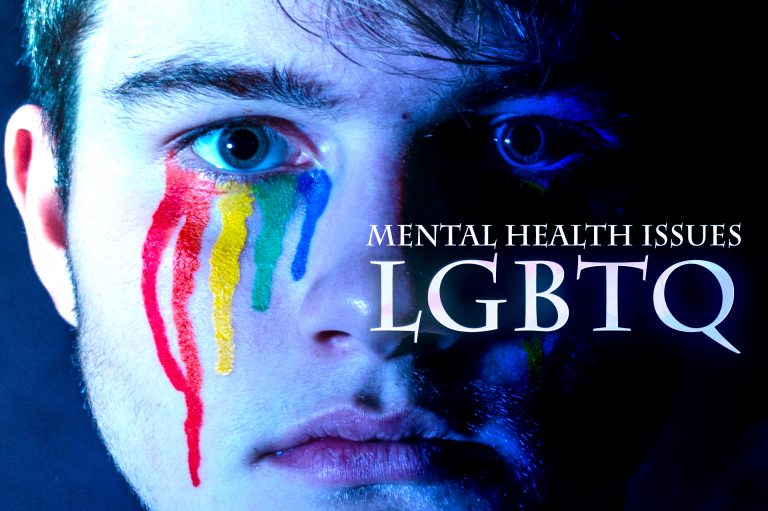
Why Do Homosexuals Have More Mental Health Problems?
James R. Aist
“You cannot prove a point by appealing to an assumption. Proof requires objective evidence.”
(NOTE: The numbers in parentheses refer to specific references listed at the end of the article)
Introduction
Homosexuality is associated with significantly elevated levels of mental health problems compared to heterosexuality, including a wide range of mental disorders, depression and suicide (1, 3). Gay activists have assumed that these differentially elevated mental health problems are a result of social and structural stigmas aimed at homosexual people by a heterosexual, homophobic society (e.g., 12), rather than anything having to do with the homosexual experience per se. Let’s have a look at the “scientific” “evidence” regarding this claim.
The “Science” of Homosexuality
Before I get into the details of this research, it is necessary to put the “science” of homosexuality into perspective. In the world of science, there are at least three categories based on the precision and reliability of the results obtained by scientific inquiry. Roughly speaking, the natural sciences are considered “hard” while the social sciences are usually described as “soft”. Features often cited as characteristic of hard science include: producing testable predictions, performing controlled experiments, relying on quantifiable data, a high degree of accuracy and objectivity and applying a purer form of the scientific method. Scientific disciplines can be arranged into a hierarchy of hard to soft, with physics and chemistry typically at the top, biology in an intermediate position and the social sciences at the bottom (click HERE). The “science” of homosexuality is squarely at the bottom of this hierarchy, being within the social sciences.
Let me illustrate briefly, with examples, how these three categories of scientific inquiry can produce different degrees of precision, accuracy, objectivity and reliability. The freezing point of water in a glass can be determined with a great deal of precision, reproducibility and objectivity (physics). The water has no control over the experimental result. The effect of temperature on the growth rate of a fungus in a Petri dish can be measured with precision as well (biology). The fungus has no control over the result. But to study homosexual behavior (social science), one must deal with a myriad of uncontrollable variables, many of which are not even known to the scientist, because people can think, emote, forget, imagine, interpret and decline to answer when they are being interviewed or completing questionnaires related to their sexuality, and they may bring their own personal agenda (bias) to the process as well. Therefore, the human subject has a great deal of influence on the data, and the outcome is necessarily “subjective” and often highly variable. This subjectivity and relative lack of control of the variables, which is characteristic of the “science” of homosexuality, can make it difficult or impossible to draw scientifically valid inferences and conclusions. And that is why the “science” of homosexuality is considered to be one of the “softest” of all the sciences.
Social Stigmas
The body of research purporting to validate the assumption that social stigmas cause the elevated levels of mental health problems in sexual minorities — by documenting associations between perceived discrimination of sexual minorities as reported in questionnaires soliciting individual responses, on the one hand, and negative mental health outcomes on the other hand — suffers from fatal flaws and limitations. While this research has managed to generate evidence of possible associations between social stigmas and elevated mental health problems in sexual minorities, Keyes, et al. (9) pointed out that results based on subjective, self-report of perceived discrimination could be confounded with mental health status, which may, in turn, lead to biased associations between social stigmas and mental health outcomes. They further stated that there are alternative pathways to mental disorders in homosexual people, such as social disadvantage and social norms. These are serious flaws that are not accounted for in these studies. Then they discussed what is called the “minority paradox”, where racial/ethnic minority groups (including Blacks, Hispanics and Asians) not only do not experience elevated levels of mental health issues in the presence of social stigmas, but they actually have lower rates compared to Whites. Thus, the theory that social stigmas cause mental health issues in minorities is apparently not valid for most large minority groups and is therefore suspect as a de facto explanation for mental health issues in sexual minorities.
In 2011, a study published by Chakraborty et al. (1) represented the first time that the association of perceived discrimination with mental health issues of sexual minorities was investigated using a random sample of the population, rather than responses from targeted minorities. But, once again, the results were based on the subjective responses of perceived discrimination and are subject to the flaws of such an experimental design, as discussed above. Moreover, the low magnitude of perceived discrimination (only 4.9% of the homosexuals in the study reported discrimination) was not only indicative of a very small potential effect of discrimination, but it left the vast majority of the mental health problems of the homosexuals in this study to be explained by other factors that were not identified. In a scientifically reviewed response to this report (2), psychiatrist Dr. Mohinder Kapoor pointed out that cross-sectional studies like this can only raise the question of an association, rather than test a hypothesis (i.e., the cross-sectional experimental design does not allow scientifically valid cause-and-effect inferences to be made). He further concluded, boldly, that one cannot test whether psychiatric problems are associated with discrimination on grounds of sexuality.
In another recent study, concerning purported effects of the social environment on suicide attempts in sexual minority youth (4), there were also fatal flaws: 1) the cross-sectional design of the study did not permit valid inferences or conclusions to be drawn regarding causality; 2) although the data base used contained information on such things as “physical abuse by a romantic partner”, “sexual contact with an adult” and “ever being forced to have intercourse involuntarily” (11), these potentially confounding factors were mysteriously omitted from the study; 3) the difference found was not statistically significant (i.e., not shown to be real); and 4) the magnitude of the difference found was so small as to be functionally inconsequential (i.e., not a significant factor, even if real (11). Thus, this study of social stigmas also failed to provide any scientifically valid conclusions regarding the cause of mental health problems of sexual minorities.
To summarize, studies purporting to demonstrate that social stigmas, operating at the level of individual experience, cause mental health problems in sexual minorities suffer from fatal flaws and limitations, such as the use of “perceived discrimination”, failure to account for plausible alternative explanations, a “cross sectional” design, and minute and statistically insignificant differences, any one of which is sufficient to make valid cause-and-effect inferences impossible from a scientific standpoint. Thus, this body of research has failed to provide any scientifically valid conclusions upon which to base new public policy measures (e.g., legalization of “gay marriage”) aimed at reducing the disparate levels of mental health problems found in sexual minorities.
Structural Stigmas
The failure of earlier studies to validate the theory that social stigmas and discrimination cause elevated levels of mental health problems in sexual minorities has spawned a new research initiative using a different research design (5-8). The strategy here is to use more objective “structural stigma” and “structural remediation” as measures of discrimination, rather than the subjective measure using self-reported perceptions of discrimination. The specific mental health issues included in these studies were various mental health disorders, depression and early mortality (including both suicide and murder).
The basic aim of this relatively new research strategy is to show that certain governmental and institutional actions or religious viewpoints that target the homosexual community in selected geographic regions (e.g., a ban on “gay marriage”, exclusion of “sexual orientation” from anti-discrimination laws, and labeling of homosexual behavior as “sin” by Christian denominations) represent structural stigmas that cause the mental health problems that affect homosexuals differentially when compared to geographic regions that have gay-affirming policies in place (e.g., legalization of “gay marriage”, inclusion of sexual orientation in anti-discrimination laws and more liberal Christian denominations that do not view homosexual behavior as sin).
While these studies have succeeded in documenting possible associations between structural stigmas and elevated levels of mental health problems of sexual minorities, I found that all of these research studies, much like their predecessors, have fatal flaws and limitations that preclude the drawing of objective, scientifically valid, cause-and-effect inferences or conclusions: 1) all but two of these original research articles admit that the “cross-sectional” nature of the data precludes the drawing of any cause-and-effect inferences or conclusions; 2) the authors also admit that, in every case, their results could be easily accounted for by “differential mobility”, whereby the stigmas under study would prompt relocation of the healthier portion of the homosexual minority population to a more gay-friendly geographic region prior to the gathering of the data; and 3) all of these studies failed to take into account several potentially important “confounding factors” that could have produced the differences reported (i.e., the authors don’t really know what may have caused the results they obtained).
The two studies that were “longitudinal” (i.e., data were collected at two different times), rather than “cross sectional” (i.e., data were collected at only one time), deserve further consideration, because the problems associated with a cross-sectional design were avoided. The first of these two studies (6) purported to show that structural stigmas cause increased psychiatric disorders in sexual minorities by using a data base that included data collected at two different times. Serious limitations included the following: 1) the data set was too small (some of the results were not statistically significant and therefore not shown to be real); 2) sexual orientation was assessed only for the second period of data collection, not for the first, making any perceived increases due to sexual orientation suspect; 3) there was a 48% increase in psychiatric disorders among sexual minorities living in states without gay marriage bans (conflicting results); and 4) they did not rule out differential mobility as an alternative explanation for the results. For these reasons, the authors were not able to draw any clear cut conclusions from the results of the study. The second of these two longitudinal studies (7) purported to show that legalizing same-sex marriage reduced both the use of and the expenditures of gay and bisexual men at health care clinics. The most serious limitations of this study included the following: 1) there was no comparison to a control group of heterosexual men (a requirement of properly designed scientific studies); 2) failure to consider the likely effects of a declining economy on the parameters studied (N.B.- the AMA’s Council on Science and Public Health noted that such correlations were due to economics, cf. 10); and 3) billing record data were not subjected to statistical analysis to determine whether or not the differences reported were real (also a requirement of properly designed scientific studies). For these reasons, the authors did not draw any clear cut conclusions from the results of the study.
In addition, in another of these studies (8), missing data were “imputed” (i.e., artificially generated and then added to the database) to obtain statistically significant differences (only in the “soft sciences” would such a procedure be permissible)!
Therefore, it can be fairly stated that this newer body of research is so riddled with fatal flaws that, at best, it “may suggest the possibility that structural stigmas could account for some of the negative health outcomes for sexual minorities in some cases.”
Conclusions
My conclusions, based primarily on scientific perspectives and concessions of the scientists who conducted the original research on social and structural stigmas, are that 1) at the most, this may be a worthwhile area of research for more objective and scientifically sound investigations in the future, if and when that becomes possible; and 2) for the time being, the jury is still out concerning what really causes the elevated levels of mental health problems in sexual minorities. Hatzenbuehler et al. (8) actually admitted that no study has shown that either social or structural stigmas cause mental health problems! Thus, this entire body of research has failed to provide any scientifically valid conclusions upon which to base new public policy measures (e.g., legalization of “gay marriage”) aimed at reducing the disparate levels of mental health problems found in sexual minorities.
If Not Stigmas, Then What?
I suggest that it remains a real possibility that the elevated levels of mental health problems among sexual minorities is caused primarily by the unwanted, dreadful realization — during the emotionally charged and very sensitive pre-teen and teen years — that one is sexually attracted to members of the same gender, instead of to members of the opposite gender, and that this realization is psychologically and mentally devastating to individuals because it dashes their deeply held and cherished hopes and dreams of leading a normal, healthy, heterosexual adult life that includes a wife and children. In other words, maybe the elevated levels of mental health problems experienced by homosexual people are primarily an indirect result of being homosexual in a heterosexual world, rather than a result of social and structural stigmas created by heterosexual “homophobes.” For example, because homosexual people are only about 1.5% of the general population (click HERE), feelings of isolation and loneliness could very well account for part of the disparity in mental health problems, as could the high levels of promiscuity and relationship breakups that are characteristic of the homosexual population (11, 13). King and Nazareth (2006) put it this way: “There are a number of reasons why gay people may be more likely to report psychological difficulties, which include difficulties growing up in a world orientated to heterosexual norms and values…” (2). And, as mentioned above, Keyes, et al. (9) stated that there are alternative pathways to mental disorders in homosexual people, such as social disadvantage and social norms. Unfortunately, in our politically correct, liberal, social climate, blaming the heterosexual majority for the problems experienced by the homosexual minority always takes precedence over anything that might, instead, be innocently inherent in the basic nature of the homosexual experience itself. Homosexual behavior is biologically aberrant and unnatural, medically unhealthy and biblically immoral. The sooner the gay activists accept these realities, the sooner homosexual people can get around to the business of dealing with their disorder realistically, instead of trying to blame their problems on those of us who refuse to join them in their fantasy world.
Potential Influence on Social Policies and Laws
Despite the lack of any scientifically valid conclusions in any of these studies, they are being used to shape the development of public opinion, social policies and laws and to weigh in on law suits regarding such things as “gay marriage” and “hate crimes” (3, 5, and click HERE ). You should be aware that this is the kind of so-called “scientific” research that is fueling the advancement of the “gay agenda.”
After Word
The elevated levels of mental health problems in sexual minorities, compared to levels found in the heterosexual majority, are very real and represent a serious public health problem that deserves continuing efforts to understand and eliminate this disparity, insofar as possible. Regardless of what the causes of this disparity may be, Christians should be at the forefront of efforts to eliminate mistreatment of homosexual people, including, but not limited to, teasing, bullying, name-calling, unnecessary discrimination, beating and, of course, murder. We are always to “Do unto others as you would have them do unto you…” (Matthew 7:12).
And yet there are concessions that cannot be made while remaining true to our Christian, religious convictions as prescribed in the Bible, and to biological realities. In all honestly, we cannot and should not abandon the biblical views concerning the immorality of homosexual practice (Genesis 19:5 with Jude 1:7; Leviticus 18:22; Leviticus 20:13; Romans 1:26-27; I Corinthians 6:9-10; and I Timothy 1:10), including “gay marriage” (click HERE). Nor should we remain silent about these matters; the Bible requires that we warn against the spiritual result of unrepented sins (Ezekial 33: 8-9), and it warns us to refrain from encouraging and/or approving of sin (Leviticus 19:1; Isaiah 5:20; Malachi 2:17; Matthew 5:19-20; Matthew 18:6; Romans 14:22). And we should be willing to be condemned by the world for discriminating against practicing homosexuals who want to be church members and leaders and/or employees of churches and para-church organizations (click HERE). Moreover, we should not lose sight of the fact that the practice of homosexuality is statistically abnormal (wherever it may be found in nature), biologically unnatural (wherever it may be found in nature) and medically unhealthy (click HERE). To deny these self-evident, and well-documented facts that characterize homosexual practice just to try to make homosexual people feel better about themselves would be both dishonest and counter-productive. Physical and mental health will not result from living in a make-believe world that denies reality. And finally, Christians should encourage dissatisfied homosexual people to seek and obtain counseling and ministry that is bible-based, to help them deal effectively and honestly with their unwanted homosexuality, and, hopefully, to abandon it (click HERE).
In standing our ground, however, we should always treat homosexual people with all appropriate expressions of love, kindness and respect, as these are defined in the Bible. And we should always be quick to share the good news of the Gospel of Jesus Christ with homosexual people if and when the opportunity presents itself, keeping in mind that we are all made in the image and likeness of God and are all dearly loved by Him. Once a homosexual person becomes born-again, the Holy Spirit will make sure that conviction comes and homosexual sins are repented and abandoned (click HERE). “The Lord is … not wanting anyone to perish, but everyone to come to repentance.” (2 Peter 3:9). And, as Christians, that must remain our desire as well for homosexual people.
Summary
Homosexuality is associated with significantly elevated levels of mental health problems compared to heterosexuality. Gay activists assume that these differentially elevated levels of mental health problems are a result of social and structural stigmas aimed at homosexual people by a heterosexual, homophobic society, rather than having anything to do with the homosexual experience per se. Scientists have attempted to prove that this assumption is true by conducting studies that generate an apparent association of either social or structural stigmas with elevated levels of mental health problems in sexual minorities. However, all of these studies have fatal flaws and limitations that prevent scientifically valid cause-and-effect inferences or conclusions to be made, leaving us with the original assumptions still untested. Even the leading researcher in this field admitted that no study has shown that either social or structural stigmas cause mental health problems! Therefore, it remains a real possibility that this phenomenon is caused primarily by the unwanted, dreadful realization — during the emotionally charged and very sensitive pre-teen and teen years — that one is sexually attracted to members of the same gender, instead of to members of the opposite gender, and that this realization is psychologically and mentally devastating to individuals because it dashes their deeply held and cherished hopes and dreams of leading a normal, healthy, heterosexual adult life that includes a wife and children. In other words, could it be that the elevated levels of mental health problems experienced by homosexual people are simply an indirect result of being homosexual in a heterosexual world, rather than a result of social and structural stigmas created by a homophobic, heterosexual majority? Regardless of why sexual minorities have elevated levels of mental health problems, we should always treat homosexual people with appropriate expressions of love, kindness and respect, as these are defined in the Bible. And we should always be quick to share the good news of the Gospel of Jesus Christ with homosexual people when the opportunity presents itself, keeping in mind that we are all made in the image and likeness of God and are dearly loved by Him.
References Cited
1. Chakraborty, A., et al. (2011). Mental Health of the non-heterosexual population of England. British Journal of Psychiatry 198:143-148.
2. Collingwood, J. (2011). Higher Risk of Mental Health Problems for Homosexuals. Psych Central (click HERE).
3. Hatzenbuehler, M.L. (2010). Social Factors as Determinants of Mental Health Disparities in LGB Populations: Implications for Public Policy. Social Issues and Policy Review 4:31-62.
4. Hatzenbuehler, M.L. (2011). The Social Environment and Suicide Attempts in Lesbian, Gay, and Bisexual Youth. Pediatrics 127:896-903.
5. Hatzenbuehler, M., et al. (2009). State-Level Policies and Psychiatric Morbidity in Lesbian, Gay, and Bisexual Populations. American Journal of Public Health 99:2275-2281.
6. Hatzenbuehler, M., et al. (2010). The Impact of Institutional Discrimination on Psychiatric Disorders in Lesbian, Gay, and Bisexual Populations: A Prospective Study. American Journal of Public Health 100:452-459.
7. Hatzenbuehler, M., et al. (2012). Effect of Same-Sex Marriage Laws on Health Care Use and Expenditures in Sexual Minority Men: A Quasi-Natural Experiment. American Journal of Public Health 102:285-291.
8. Hatzenbuehler, M., et al. (2014). Structural Stigma and All-Cause Mortality in Sexual Minority Populations. Social Science and Medicine 103:33-41.
9. Keyes, K., et al. (2011). Stressful Life Experiences, Alcohol consumption, and Alcohol Use Disorders: The Epidemiologic Evidence for Four Main Types of Stressors. Psychopharmacology 218:1-17.
10. Menzie, N. (2014). Study Linking Marriage to Gay Men’s Health ‘Flawed’, Say Experts. The Christian Post (click HERE).
11. Schumm, W. (2011). Replies to “The Social Environment and Suicide Attempts in Lesbian, Gay, and Bisexual Youth.” (click HERE)
12. Tracy, N. (2013). Homosexuality and Mental Health Issues. Healthy Place: Trusted Mental Health Information (click HERE).
13. Whitehead, N. (2002). Are Homosexuals Mentally Ill? (click HERE).
(To find more of my articles about HOMOSEXUALITY, click HERE)


 rethinkingtheology