Be the One!

See the source image

Be the One!

James R. Aist

“The King will answer, ‘Truly I say to you, as you have done it for one of the least of these brothers of Mine, you have done it for Me.’ (Matthew 25:40)

Recently, I began to reflect on some of the instances when someone took the initiative to step up and be the one who blessed me by filling a need in my life that I couldn’t fill on my own. As a result, I felt a flush of gratitude and appreciation for these thoughtful and generous people and for what they did for me. I am writing this article to encourage you to be on the lookout for opportunities to “be the one” yourself. As you read on, keep in mind that my family had to move every 2-3 years, because Daddy was a Methodist minister. So, hold on, we’re going to move around a bit!

Let me begin by sharing with you three of the blessings that came quickly to my mind that day. The first of these happened when I was about 12 years old, we were living in Evening Shade, Arkansas, and Daddy didn’t have much time to spend with me at that time. Mr. Thomas was the Principal of the local school and a very avid and accomplished fisherman. He was firm with the students, but he also had a sweet, calming spirit about him. We knew that he had our best interests in mind. I greatly admired and respected Mr. Thomas. Well, one Friday afternoon, he approached me at school and asked if I would like to go fishing with him the next day! At first, I was taken aback that he would think of me, a 12 year old boy, as a fishing buddy. But I quickly agreed to go, and we had a great time together. He treated me as if I were his equal, at least for that one afternoon, and I learned some things about fishing from a real master.

The second blessing came to me about three years later. I had just been selected to be on the varsity basketball team at Batesville High School and was about to experience my first away game. I had some warm clothing to help keep me warm on the long, cold school bus rides from away games, but I hadn’t thought much about anything more substantial for the coldest nights. My family couldn’t afford anything warmer for me anyway. Then one day as I was passing by the old General Store in Bethesda on my way home from basketball practice, the store owner, Mr. Porter, caught my attention and asked me to come inside, because he had a surprise for me. So, I went inside, and he handed me a large, flat, cardboard box. When I opened the box, inside was a brand new, hooded, parka, perfect for long, cold bus rides late at night! He said to me, “I didn’t want you to get cold coming back from your away games, so I got you this.” Well, I was quick to thank him for the gift, and I was amazed that he would even think to do that for me, when I hadn’t even given it a thought myself until then.

The third blessing I will share with you came a couple of years later when I had made the basketball team at Springdale High School. We lived 6 miles away, in Elm Springs, I didn’t have a car, and my parents were unable to provide me a ride home after away games. So, it seemed to me that I would have to give up on playing basketball for my last two years of high school, which would be a major letdown, to say the least. So, I told  coach Sanders that I couldn’t play after all, and why, but he was not discouraged. “Don’t worry,” he said. “I will give you a ride home after the away games.” “But that’s six miles each way, it will be very late at night, and you have a family to go home to after the games!”, I countered. “That’s OK,” he said, “I want to do it.” Once again, I was amazed that he would make that kind of sacrifice for me. It hadn’t crossed my mind to ask him for a ride, and I wasn’t even his star player.

One more blessing comes easily to mind and must be told. At the time, I was a graduate student, and we were headed to London, Ontario, where I would conduct a research project during the summer that would be helpful to my career development. We decided it would be a great opportunity to camp for a week in the Adirondack Mountains, before moving on to London. Unfortunately, there was a hurricane making its way North that, although considerably weakened by the time it got to New York, still was packing strong winds and lots of cold rain. For some reason, we were not aware that we had camped through a hurricane until after the fact, but we were very much aware that we and our camping gear were damp and wet, and that we were fed up with being confined to our tent for most of a week just trying to be as warm and dry as possible. Now, here comes the good part. An older couple “camping” comfortably next to us in a large camper had befriended us during the week, offering to have us spend some time with them to get warm and dry. But, alas and alack, when it came time for us to pack up and leave, we were neither warm nor dry. They picked up on our suffering, and, having pity on us, made us a most amazing offer. These total strangers would lend us the keys to their house – which was right on our way to London – so that we could spend the night there and get us and our camping gear dry, warm and clean for the final leg of our journey the next day! They even invited us to help ourselves to their strawberry patch, which was in its peak of production at the time. We could hardly believe our ears; who does that? We knew that they could trust us with their stuff, but they didn’t. Such a thing can only come from generous hearts that are extraordinarily trusting and compassionate. They watched us suffer through the wind, rain and cold for a week, and then stepped up and did what they could do to help us out. Of course, we couldn’t refuse their offer and were richly rewarded for their kindness. I still can’t fully wrap my mind around it, though. Sadly, I must confess that I wouldn’t have done that.

As you can see, the common element in all four of these stories is that someone saw a need in my life and just took care of it themselves. That is what “grace” looks like. Grace cannot be either earned or deserved; it can only be offered and received. And so it is with salvation: we are saved, not by works, but by the grace of God through the gift of faith in His only begotten Son, Jesus Christ. So, as we continue our journey through life, let’s extend grace to those around us as the opportunities arise and as we are able. Let’s us “Be the One!” In doing so, we will not only be helping someone in need (that’s a good thing), but we will also be glorifying God by modeling His grace to others.

(To read more of my articles with biblical themes, click HERE)


The Bible Answers the “Big Questions”

See the source image

The Bible Answers the “Big Questions”

James R. Aist

“The fear of the Lord is the beginning of knowledge, but fools despise wisdom and instruction.” (Proverbs 1:7)

There are a number of “big questions” that mankind has been struggling with since Adam and Eve were banished from the Garden of Eden for sinning against God. All too often, the answers to these questions seem unknowable, especially when God is left out of consideration. This article focuses on answers to some of these “big questions” that I have discovered through careful study of the Bible. You may or may not find these answers to be as convincing and satisfying as I do, but the Bible does have answers nonetheless.

The article is structured so as to first introduce you to each of the questions I am addressing here, and then to provide hyperlinks that will connect you to the pertinent article(s) that will provide the answer(s). Let’s get started, shall we?

  1. What is man? This may seem at first to be a silly question with an obvious answer, but, for our purposes, it’s a good place to start. All of the other “big questions” arise because of our unique nature and existence. For a biblical answer to this question, click HERE.
  2. For what purpose did God create us? Before God created Adam, He had already created the earth, with all of its plants and animals, and the angels. Something must have motivated Him to conclude His works of creation with…us. But what was it? For a biblical answer to this question, click HERE.
  3. What is the righteousness that God requires? Adam and Eve were banished from the Garden of Eden for sinning against God, and this separation from God continues to this day in all who are born into this world. But God has provided a way for us to be reconciled to Himself by becoming righteous ourselves, despite our sins. How can this be? For a biblical answer to this question, click HERE.
  4. Who goes to hell? All of mankind have sinned and fallen short of the righteousness that God requires. God has provided a way for mankind to be reconciled to Himself, but what happens to those who do not follow this way? For a biblical answer to this question, click HERE.
  5. Why is evil and suffering so pervasive in this present world? The Garden of Eden into which Adam was originally placed was an environment free of evil and suffering. Why isn’t our world still like that? For a biblical answer to this question, click HERE.
  6. Why is God allowing Satan to tempt us during this Age of Grace? Those of us who have been “born again” are saved by the grace of God through faith in Jesus Christ, so why hasn’t God already put an end to Satan’s permission to tempt us to sin? For a biblical answer to this question, click HERE.
  7. What is Jesus waiting for? Jesus promised that He would come again to the earth to destroy His enemies and rule the earth with His saints. That was about 2,000 years ago, and He still hasn’t come back. So, what exactly is He waiting for? For a biblical answer to this question, click HERE.

As you can see, I have not tried to answer all of the “big questions”, but I hope that you have been blessed by what the Bible says about these seven. Perhaps you can discover on your own what the Bible has to say about your “big questions.” Happy hunting!

(To read more of my articles on biblical topics, click HERE)

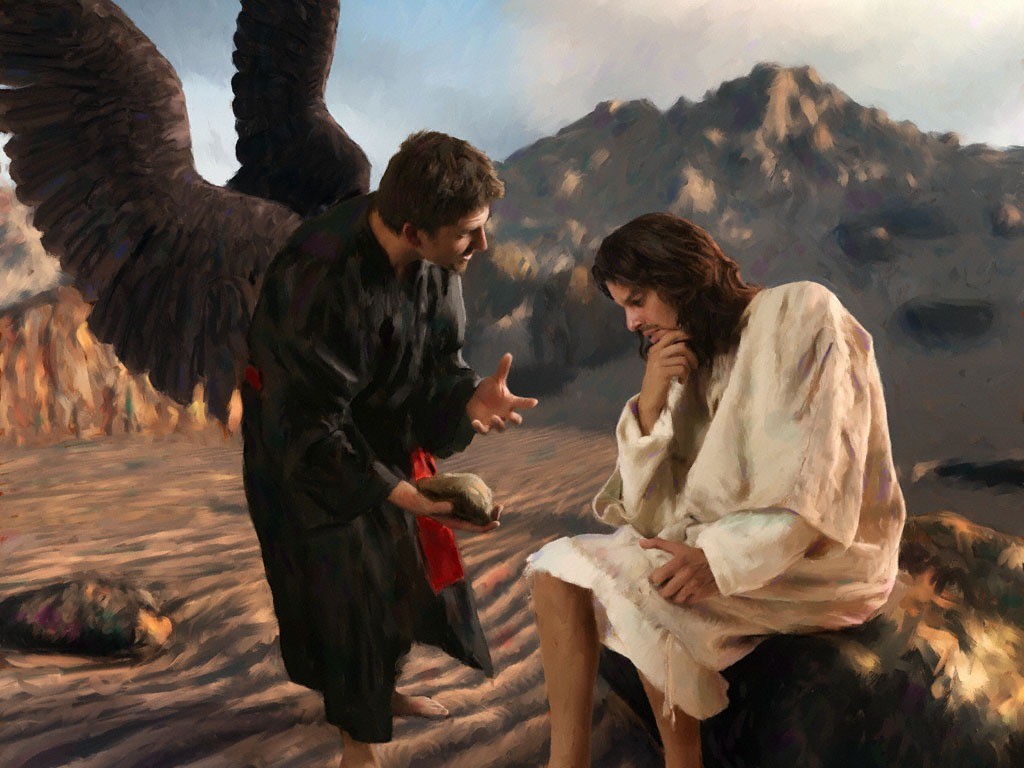
Why Does God Allow Satan to Tempt Us?

See the source image

Why Does God Allow Satan to Tempt Us?

James R. Aist

“Then Jesus was led up into the wilderness by the Spirit to be tempted by the devil.” (Matthew 4:1)

The Bible alludes to “temptations” using various terms, such as tests, adversities, trials, persecutions and tribulations. This is because temptation is portrayed primarily as a testing of our faith in, and loyalty to, God. There’s no doubt about it: every man from Adam to Jesus to us has been or will be “put to the test” (cf., Psalm 11:5; John 16:33; 1 Peter 4:12; Hebrews 4:15; Revelation 3:10). To further establish the truth of this point, let’s expand, somewhat, this trail of temptation in the Bible, so that we may more fully grasp its inevitability. God allowed Satan to tempt Eve (and through her, Adam) in the Garden of Eden using a slanderous lie; God allowed Satan to tempt Job by destroying all of his earthly possessions, except his life and his wife; Abraham was tested by God when He instructed him to offer his son, Isaac, as a burnt offering; David was tested by the fearful sight of a giant, Goliath, who was mocking the God of Israel to his face; Jesus was led up into the wilderness by the Holy Spirit to be tempted by the devil; Peter was tempted to deny that he was a follower of Jesus; we are tempted by Satan (1 Peter 5:8) to sin and to abandon our faith in Jesus; and, at the end of the millennial reign of Jesus, Satan will tempt the inhabitants of the earth to join him in mounting one last army to defeat Jesus and His followers. So, the question arises, “Why does God allow Satan to tempt us?” To put the question another way, “Why hasn’t God forbidden Satan to tempt us during this Age of Grace?” Isn’t it enough that we have declared, sincerely, our allegiance to Him?

The short answer to this question is, “No, mere words, by themselves, are not enough.” But why Does God require more than our solemn word on it? I believe that the Bible gives two, interconnected and fundamental answers to this question. First, let’s take a close look at Genesis 3, where we can find one answer. Satan was allowed to test the fidelity of Adam and Eve toward God, and the first man and woman, representing to God all of mankind, failed the test. What followed, necessarily, was a cosmic consequence of “biblical proportions”: Adam and Eve had to be banished from God’s presence in the Garden of Eden to an outside world ruled by God’s arch enemy, Satan. Adam and Eve got it wrong, and the whole of creation has been paying the price for their transgression ever since. What if God, in giving mankind a second chance, requires us all to get it right this time by willfully obeying God, not Satan, when Satan tests our loyalty to Him. Our loyalty to God must be demonstrated by our willful obedience to God when we are tested. Jesus said, “If you love Me, keep My commandments (John 14:15).” That is the proof that God requires, beyond mere words to that effect; words are cheap, but actions can have eternal consequences. Peter says it this way: “In this you greatly rejoice, even though now, if for a little while, you have had to suffer various trials, in order that the genuineness of your faith, which is more precious than gold that perishes, though it is tried by fire, may be found to result in praise, glory, and honor at the revelation of Jesus Christ…” (1 Peter1:6-7). So, in my view, that is one reason why God is allowing Satan to remain active on the earth during this Age of Grace. My perception is that God is using Satan to test and prove our faith, in order to demonstrate that what we have is not mere mental ascent to the Gospel of Jesus Christ (Matthew 13:21), but saving faith that endures to the end (Matthew 10:22; 1 Corinthians 10:13). The other answer to this question can be gleaned from a study of Job 1-2. Satan challenged Job’s faith in God and received God’s permission to try to persecute Job into cursing Him. This challenge, in effect, turned into a contest between God and Satan to determine if God’s power to keep Job faithful to Him was greater than Satan’s power to get Job to deny Him. Now, the Bible says that it is by the power of God that believers are kept faithful to the end (1 Peter 1:3-5). By allowing Satan to test the faith of Job, God demonstrated that His power to keep Job faithful was greater than Satan’s power to destroy Job’s faith. The Apostle Paul said it like this, “For I am persuaded that neither death nor life, neither angels nor principalities nor powers, neither things present nor things to come, neither height nor depth, nor any other created thing, shall be able to separate us from the love of God, which is in Christ Jesus our Lord (Romans 8:38-39).” So now we can surmise that God has a dual purpose in allowing Satan to tempt us: To demonstrate that a) saving faith is the kind of faith that withstands even the assaults of Satan, and b) God is more powerful than Satan in the battle for the souls of mankind. To me, these are reassuring insights concerning my own eternal destiny.

But that’s not all. In the Bible we find that the testing of our faith has other important purposes. It strengthens us against future temptations (2 Corinthians 12:10); it prepares us for future ministry in His kingdom (Hebrews 2:18; 2 Corinthians 1:4); it helps to perfect us in God’s eyes (Romans 5:2-4); and it reveals to us what is in our hearts and minds, so that we will know that He judges rightly when the time comes (Jeremiah 17:10).

And, there’s still more. When this Age of Grace is over, Satan will no longer be allowed to tempt us; he will have fulfilled God’s purposes in allowing him to tempt us during the Age of Grace, and he will be banished to the Lake of Fire for eternity, far away from us. As a result, those of us who are born again in this life will be able to enjoy the next life with Christ (Matthew 10:2) in a new and amazing world free of temptations. What a glorious day that will be!

(To read more biblically oriented articles on this website, click HERE)

Dad Gumm

See the source image

Dad Gumm

James R. Aist

“Not yet I ain’t!”, he said…

This story will require a brief introduction to a colloquialism that I grew up with in Arkansas.  When someone had tried and failed at something (for example, shooting a squirrel that was climbing up the side of a tree), they might say something like “Darn!” or “Dag nabbit!” to express their disappointment. Or, they might instead say “Dad Gummit!” or just “Dad gum!”

With that, let me tell you my version of a story that originated with my brother Johnny. At the time, Johnny was an undergraduate at the University of Arkansas, Fayetteville. He was enrolled in a class on folklore, and was required to research and submit an original essay on local lore in northwest Arkansas. So, Johnny decided to visit and interview, impromptu and unannounced, some of the old-timers in the area to find out what words of wisdom they might be willing to share with him. One day he was driving along a rural, dirt road looking for someone to interview, when he rounded a bend and saw the perfect prospect: an old man sitting in a rocking chair on the front porch of his old log cabin, high on a hill. This appeared to be just the kind of old-timer that Johnny was looking for.

So, he pulled into the dirt driveway, drove up the hill to the cabin, and began the interview. “Good morning”, says Johnny. “Howdy there, young feller”, replies the old man. Johnny then proceeds to begin the interview. “My name is Johnny Aist, what’s yours?” With a slight grin on his face, the old man replies “My last name is Gumm, but most people around here call me Dad!” Instantly recognizing this clever reference to a local colloquialism, Johnny grins accordingly and then continues the interview. “Tell me, Mister Gumm, have you lived here all your life?”, he asks. To which Dad Gumm replies, “Not yet, I ain’t, but I ain’t never lived nowhere’s else neither!”

And that’s when Johnny knew that he had stumbled onto a gem of an old-timer who was just the kind of guy he was looking for help him get an “A” on his research project!

(To read more amazing short stories on this website, click HERE)