Homosexuality: Religiously Mediated Change

See the source image

Homosexuality: Religiously Mediated Change

James R. Aist

Contrary to the fallacious claims of gay activists, homosexual people can change their sexual orientation if sufficiently motivated, as evidenced by numerous personal testimonies (click HERE). I have briefly reviewed such change resulting from secular counseling and therapy (click HERE). In the present article, I focus on religiously mediated change, which has been around for a very long time and has been scientifically documented, as you will see. (Note: numbers in parentheses refer to numbered references at the end of the article.)

It’s important to realize, at the outset, that the God of the Bible wants to change homosexual people Himself, through the “name” (i.e., the power and authority) of Jesus Christ, as recorded in the Bible (I Corinthians 6:9-11)! Interestingly, this is probably the first-ever published report of homosexual transformations. Now, Paul was well aware that the condition of homosexuality has two aspects: 1) same-sex attractions (SSA), which he described as “shameful lusts” and “inflamed with lust for one another” (Romans 1:26-27); and 2) the practice of homosexuality (Romans 1:26-27 and 1 Corinthians 6:9). Thus, when Paul states “…that is what some of you were”. But you were washed…” (1 Corinthians 6:9-11), he is not just speaking about the abandoning of homosexual practice (celibacy), but also the cessation of SSA. On the other hand, Paul did not say whether or not these particular transformed homosexual people became heterosexual. Moreover, Jesus himself wants homosexual people to be changed, else why would these Corinthian homosexual people have been changed through His power and authority? Jesus did not come to save us and our sins, but to save us from our sins.

More recent examples exist of religiously mediated change from a homosexual to a heterosexual orientation (1, 2). Here are some specifics of one of these studies. Pattison and Pattison (3) conducted a scientific study of 11 men who changed from exclusive and active homosexuality to exclusive or almost exclusive heterosexuality after converting to Christianity in a Pentecostal church fellowship. On the Kinsey 7-point sexual orientation scale, all subjects manifested major before-after changes. Eight of the 11 subjects became exclusively heterosexual. Although the men participated in prayer groups with heterosexual men and women, no effort was made to effect the change of sexual orientation. NARTH (4) has listed 24 autobiographies and 14 case histories of homosexual people who have undergone religiously mediated change from homosexual to heterosexual. Jones and Yarhouse (5) conducted a scientific study that was designed to meet high standards of empirical vigor and is perhaps the best scientific publication to date in this regard. They studied 61 subjects who completed the study, which included six independent assessments over a total time span of 6-7 years. Standardized, respected measures of sexual orientation were used. Of the 61 subjects, 23% reported successful conversion to heterosexual orientation and functioning, while another 30% reported stable behavioral chastity with substantive dis-identification with homosexual orientation. Moreover, there was a statistically significant increase of heterosexual attraction. The authors concluded that their results demonstrate meaningful shifts along a continuum that constitute real changes for some of the subjects. For comparison, a success rate of around 25%-30% is generally achieved by therapists and counselors for psychological disorders and behavioral problems, such as alcoholism (6, 7, 8).

Restored Hope Network is a membership-governed network dedicated to restoring hope to those broken by sexual and relational sin, especially those impacted by homosexuality. They proclaim that Jesus Christ has life changing power for all who submit to Christ as Lord; they also seek to equip the church to impart that transformation. Their website (click HERE) is able to connect many with a nearby ministry that will offer help in overcoming homosexuality. Also, P.A.T.H. (click HERE) has a list of religious and secular organizations and ministries offering help for dissatisfied homosexuals seeking change. I can also recommend two online resources that will enable almost anyone, anywhere, to obtain Christ-centered help in overcoming unwanted homosexuality: Taking Back Ground (click HERE)  and  Reach Truth (click HERE).

References Cited:

  1. NARTH, 2012. 6) Religiously Mediated Change. (click HERE)
  2. Phelan, J.E., N. Whitehead and P.M. Sutton. 2009. What Research Shows: NARTH’S Response to the APA Claims on Homosexuality. Journal of Human Sexuality, Volume 1, Pages 9-39. (click HERE)
  3. Pattison, E.M. and M.L. Pattison. 1980. “Ex-Gays”: Religiously Mediated Change in Homosexuals. American Journal of Psychiatry 137:1553-1562.
  4. NARTH. 2012. Autobiographies of Religiously Mediated Change. (click HERE)
  5. Jones, S. L. and M.A. Yarhouse. 2011. A Longitudinal Study of Religiously Mediated Sexual Orientation Change. Journal of Sex and Marital Therapy 37:404-427.
  6. Whitehead, N. and B. Whitehead. 2016. My Genes Made Me Do It! – Homosexuality and the Scientific Evidence. Chapter 12. Can sexual orientation change? (click HERE)
  7. Socarides, C.W. 1995. Homosexuality: A Freedom Too Far. Adam Margrave Books, Phoenix AZ.
  8. Satinover, J. 1996. Homosexuality and the Politics of Truth. Hamewith Books/Baker Books, Grand Rapids MI.


(For more articles on HOMOSEXUALITY by Dr. Aist, click HERE.)

Homosexuality: Secularly Mediated Change

See the source image

Homosexuality: Secularly Mediated Change

James R. Aist

“Truth is not arrived at by wishful thinking or vacuous argument. It comes, instead, by careful examination of factual evidence.”

A comprehensive history of this topic was published by Phelan, et al. (1), and numerous personal testimonies of change are available online (click HERE). Many professional therapists have reported the clinical results of their own efforts to help dissatisfied homosexuals to change. The results presented by Socarides (7) seem to be representative of successful treatment therapy. Out of around 1,000 dissatisfied male homosexuals, about 35% became heterosexual (able to have complete, satisfactory sex with a woman and develop the capacity to really love her). Another 31% were able to control previously uncontrollable impulses toward same-sex sex (abstinence). The remaining 34% discontinued treatment for various reasons.

Satinover (2) compiled the results of nine outcome studies of clinical results reported in the 1950s through the 1980s. Out of a total of 341 dissatisfied homosexuals treated, success rates varied from 27% to 100%, where success was defined “as considerable to complete change.” In these reports, the average success rate was 52%. A range of reported success rates often reflects varying degrees of success with different therapy approaches; some approaches and some therapists are more effective than others.

Individual therapists have also reported long-term success in homosexual to heterosexual changes. Masters and Johnson (3) reported that 71.6% of their transformed homosexual subjects were still heterosexual after five years (when the study was terminated), indicating that these sexual orientation transformations represented long-term changes. Mayerson and Lief (4) found that 47% of their patients were functioning heterosexually after a mean follow-up period of four and a half years. And some transformed homosexuals were reported to have remained exclusively heterosexual for as long as 20 years (5)!

Surveys and meta-analyses also show the reality of secularly mediated change. Bieber et al. (6) is a good example. Out of 106 homosexual men in the studies they reviewed, 35 (33%) changed to exclusively heterosexual. And in a follow-up study conducted three years later on 15 of these formerly exclusively homosexual men (all those for whom data could be reclaimed), Socarides (7) found that 12 (80%) had remained exclusively heterosexual. Clippinger (8) reported similar results from 12 independent studies. Of 785 patients, 307 (38%) were “cured” (i.e., changed from homosexual to heterosexual). Goetze (9) conducted a carefully designed meta-analysis of the results of 17 studies. He determined Kinsey ratings before and after therapy and obtained follow-up information. Of 396 subjects who were exclusively or predominately homosexual, 283 (71.5%) experienced a partial shift in sexual orientation, 69 (17.4%) acquired heterosexual behavior and 44 (11.1%) experienced a full shift to heterosexual orientation. Thus, 28.5% (17.4% + 11.1%) became exclusively or predominately heterosexual.

Again, a success rate of around 25%-30% is generally achieved by therapists and counselors for psychological disorders and behavioral problems, such as alcoholism (2, 7, 10).

The National Association for the Research and Therapy of Homosexuality (click HERE) is a professional, scientific organization that offers hope to those who struggle with unwanted homosexuality. They have extensive published resources available and can provide referrals to treatment programs and professional, experienced therapists who also can provide compassionate guidance and support to help dissatisfied homosexual people in their journey out of homosexuality.

Conclusion: Despite the vacuous denials of gay activists and their heterosexual supporters, there is more than enough clinical evidence to establish the fact that professional, secular treatment of unwanted homosexuality can be successful at a rate comparable to that for psychological disorders and for behavioral problems, such as alcoholism.

(For more articles on HOMOSEXUALITY by Professor Aist, click HERE)

References Cited:

  1. Phelan, J.E., N. Whitehead and P.M. Sutton. 2009. What Research Shows: NARTH’S Response to the APA Claims on Homosexuality. Journal of Human Sexuality, Volume 1, Pages 9-39. (click HERE)
  2. Satinover, J. 1996. Homosexuality and the Politics of Truth. Hamewith Books/Baker Books, Grand Rapids MI.
  3. Masters, W. H. and V. E. Johnson. 1979. Homosexuality in Perspective. Little, Brown & Co., Boston.
  4. Mayerson, P., and Lief, H. 1965. Psychotherapy of homosexuals: a follow-up study. In, Sexual Inversion: The Multiple Roots of Homosexuality, ed. J. Marmor. New York: Basic Books.
  5. Bieber, I. and T.B. Bieber. 1979. Male Homosexuality. Canadian Journal of Psychiatry 24: 409-421.
  6. Bieber, I., et al. 1962. Homosexuality: A Psychoanalytic Study of Male Homosexuals. Basic Books, New York.
  7. Socarides, C.W. 1995. Homosexuality: A Freedom Too Far. Adam Margrave Books, Phoenix AZ.
  8. Clippinger, J. 1974. Homosexuality can be cured. Corrective and Social Psychiatry and Journal of Behavior Technology Methods and Therapy. 21:15-28.
  9. Goetze, R. 1997. Homosexuality and the Possibility of Change: A Review of 17 Published Studies. Toronto Canada: New Directions for Life.
  10. Whitehead, N. and B. Whitehead. 2012. My Genes Made Me Do It! – Homosexuality and the Scientific Evidence. Chapter 12. Can sexual orientation change? (click HERE)

Joys without Toys

See the source image

Joys without Toys

by Angeline Brown, Guest Author

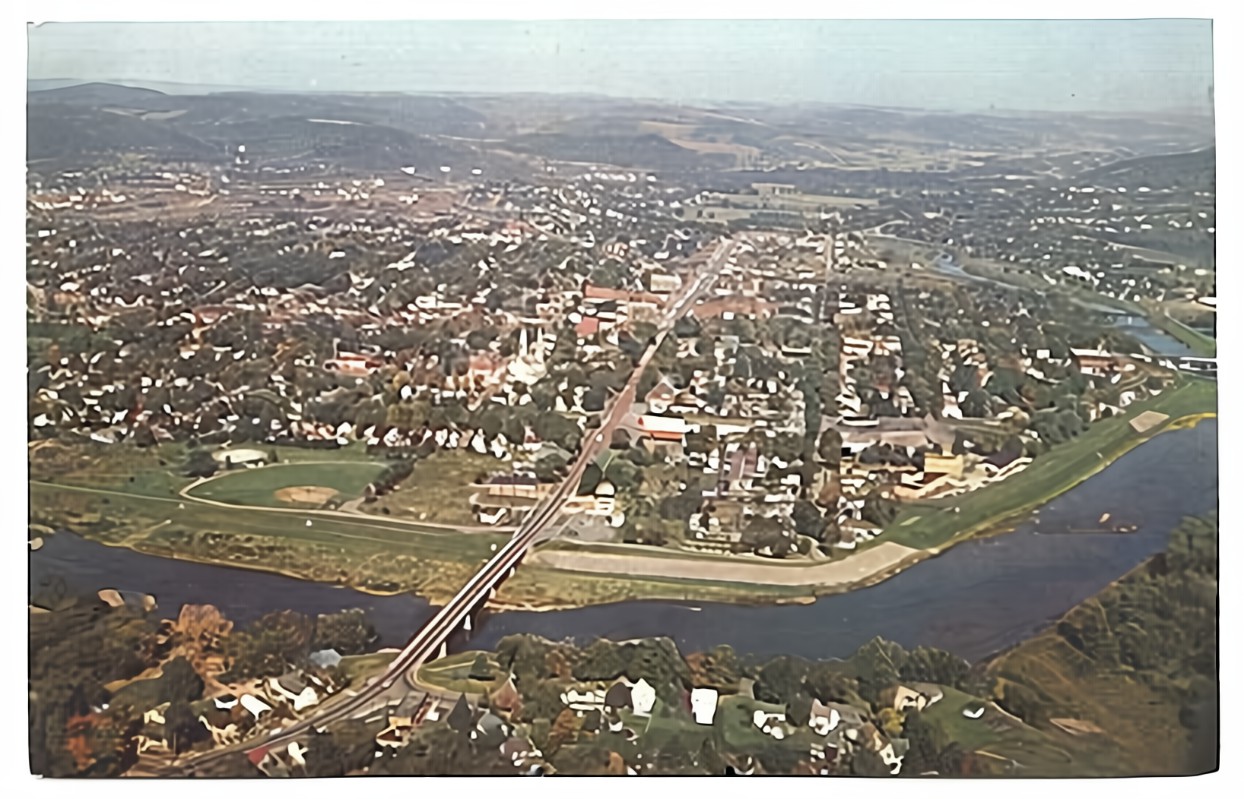
Where they lived, just within the city limits of Olean, New York, all they had to do was cross the road, walk through Ward’s meadow, trudge across Rusnick’s apple orchard, and “presto”, they were in the woods. The children would often go this way to pick Violets, Trilliums and May Apples in the Spring. Later in the growing season, they often stopped to pick a handful of Choke Cherries. A few would do, because the mouth puckered and felt shrunken from the slightly toxic taste.

They climbed the first hill, which brought them to the stone quarry. It was time now to sit down and throw pebbles to the bottom of the rocks. They made a pleasant echoing sound in the stillness of the woods as they careened from rock to rock on their way down. After a momentary rest, the children continued up the tower line.

This way lead on up, higher and higher. At this point, they stayed alert. Bears were seen here a time or two. Reaching the top provided a wonderful vantage point for observation. From there, they could view much of Olean. They picked out streets and buildings in the city, studying and surveying the whole scene all at once. They were always amazed at the vastness of this view, from the north hill all the way around to the southern boundary of the city.

The children explored the area, wandering to the East and to the West, stopping to make a dam in the pure, running brook. It trickled slowly over stones, making a wide channel to walk across and cool their bare feet. They found crabs (crawdads) under rocks and frogs waiting to catch insects. There were also many other interesting things in the woods: ferns that grew knee high, fragrant honeysuckle bushes, and mosses that looked like green velvet. Vines twisted around tall trees, high out of sight, and many hemlock evergreens held tiny, baby cones that were being rocked to-and-fro on the branches by a gentle breeze.

Going to the other side of the hill, they found the remains of a dwelling: just the shallow cellar with part of the wall intact. Later they learned it was a home that had burned down about a hundred years before. Also visible nearby were some rotting fence posts and a dilapidated gate, which probably kept a horse or cow enclosed.

Walking down to a point near the bottom of the hill, they found an overgrown path and a water hole with water still trickling in from a spring higher up. Continuing down the facsimile of a path, they saw flying squirrels leaping from tree to tree and chattering noisily, warning others about the intruders.

On towards the road, they encountered an elderly gentleman working in a large garden. He was dressed in blue overalls and a straw hat, and pushed a cultivator. He stopped and mopped his brow. “Hello,” he called. “Hello, Mr. Curtiss” replied the children. They recognized the man; he often walked along the road to the garden. They visited for a few moments, and then walked to the road towards home.

This way proved to be a lot longer than the shortcut they had taken earlier. Along the way, the children noticed a herd of Holsteins in Malone’s pasture and the large, unpainted barn that housed them, plus a couple of dogs that gave them a friendly greeting.

Passing a few more country homes, they reached their own road. As they caught sight of their house, they could almost smell the cabbage rolls that were cooking on Mom’s stove. Home at last, after a long afternoon. With a surge of fresh energy, the youngest child bolted through the door, yelling, “Last one in is a rotten egg!”

(For more short stories by Angeline Brown, click HERE)

What Kind of Rabbit Is that, Jack?

See the source image

What Kind of Rabbit Is that, Jack?

James R. Aist

When I was growing up in Arkansas, we always had beagle dogs, and we always hunted rabbits with them. At that time we (the dogs and us, that is) had never seen any kind of rabbits except cottontails and, rarely, the oversized version of them, swamp rabbits. But, the cottontails were by far the most common and easily accessible, because we had to drive to a distant swamp to hunt the big ones. Little did we know at the time that there was another kind of rabbit slowly making its way eastward into Arkansas from Oklahoma and Texas, the jackrabbit. And, for sure, we had never, ever seen one, until one day…

My family was living in Elm Springs, about 6 miles from Springdale, where I was attending high School. My oldest brother, Art, was visiting us, and we decided to go rabbit hunting. I knew of a good place within walking distance, so we let the dogs out of the pen and started down the road to a nearby field that had a mixture of grass and brush, with a small woods on the back side. Off we went into the edge of the field with shotguns loaded and dogs in a frenzy, as they always were when we took them hunting.

Now our trained beagles would automatically begin hunting for cottontail rabbits once they saw us heading into a field or woods, guns in hand. With noses to the ground, they would search feverishly and anxiously here and there in hopes of “jumping” a rabbit that was hunkered down somewhere, hoping that we would just pass it by. When the dogs would begin to pick up the scent of a cottontail, they would get highly agitated and begin to making little yipping noises as they got closer and closer to the rabbit. Then, suddenly, the rabbit would make a run for it, hopping away lickety-split with short, rapid leaps, the dogs running at top speed after them and baying loudly with each breath. The chase was on! Now, a cottontail can always run faster than a beagle at first, but if the dogs can stay on their scent trail long enough, the rabbit will tire and the dogs will catch up with it. Note that all during the chase, the dogs are baying as they continue to get the scent of the fleeing rabbit. And when we would shoot a cottontail that was on the run, the dogs would run up to it, smell and “mouth” it for a moment, and, when they could not get it to get up and run any more, they would lose interest in it and set out to find a fresh rabbit that would run. That’s how it usually goes with beagles and cottontails.

But, this time it was strangely different. The dogs began to behave like they had picked up the scent of a rabbit alright, but they weren’t yipping. They continued to follow the scent cautiously until a rabbit “jumped” and began to run away. They gave chase, but running at about half speed, not making even a peep. Right away, we knew this was no ordinary rabbit, and a kind that we had never seen before. It was much larger than even a swamp rabbit, had oversize hind legs that launched it on very long, relatively slow strides, and had huge, long ears that flopped back and forth with every leap. The dogs followed this rabbit silently and at a distance, like they weren’t really sure that they wanted to catch up with it. Normally, we would raise and fire on a rabbit as soon as we had a clear shot, but this time we just stood there for a moment, watching this spectacular, alien creature run and the dogs follow along silently at a safe distance. It was an amazing sight to see.

Then, this jackrabbit made a fatal mistake, turning slightly to his left in his haste to get away, giving Art just enough separation from the trailing dogs to make a safe shot. His aim was true, and the jackrabbit rolled to the ground, dead in its tracks as it were. Uncharacteristically, the dogs stopped about ten feet from the fallen jackrabbit, afraid to get any closer to this strange-smelling beast. They circled around it with their eyes fixed on it, just in case. The entire scenario was, to us, bizarre, to say the least, yet very exciting and memorable.

So, we carried this odd creature home and proudly showed it off to the rest of the family. They were duly impressed. Then we “cleaned” the jackrabbit, cut it into pieces and cooked it in the usual fashion: rolled in flour seasoned with salt and pepper, and then fried with Crisco in a cast-iron skillet. And guess what it tasted like…wait for it…wait for it… It tasted like…rabbit. Now, why in the world would you assume that I was going to say it tasted like chicken? A rabbit is a rabbit is a rabbit, after all. And, uh-THA, uh-THA, uh-THAT’S all, folks, because that was the first and only jackrabbit we ever ran across in all our years of hunting in Arkansas. And we killed it.

(For more stories and tales by Dr. Aist, click HERE.)