Did Paul Really Have a Thorn in His Flesh?

See the source image

Did Paul Really Have a Thorn in His Flesh?

James R. Aist

Introduction

Speculation abounds concerning what Paul’s “thorn in the flesh” (2 Corinthians 12:1-10) actually was. Could it have been a literal thorn in his physical body, or a kind of demon that followed him around, or a person who doggedly opposed his ministry, or, perhaps, some sort of physical handicap, or none of the above, or something else entirely? At the end of this article I will provide links to a couple of online articles that will go much further into this specific question than I care to, if you want to go there. What I want to focus on here is the specific points of solid information that Paul, himself, provides in his letter concerning his “thorn in the flesh” and then to emphasize and elaborate briefly on the points that Paul was actually making, in the context of this entire passage. It’s important that we do not get so carried away with speculation about what his “thorn in the flesh” was that we lose sight of why Paul shared this personal experience with us in the first place. But first, let’s consider the basic nature of the phrase itself, to get us off on a proper footing.

What Is the Nature of the Phrase “Thorn in the Flesh”

Let’s begin by considering what a ‘colloquialism” is: it is a word, phrase, or expression characteristic of ordinary or familiar conversation rather than formal speech or writing, such as “She’s out” meaning “She is not at home.” “Thorn in the flesh”, then, is a colloquialism used to describe a chronic infirmity, annoyance, or trouble in one’s life. We can get the impression that Paul’s use of the phrase was also colloquial by consulting several Old Testament passages that use a similar phrase to refer to people who were, or would be, an annoyance or hindrance to the Israelites (Numbers 33:55; Joshua 23:13; Ezekiel 2:6; and Ezekiel 28:24). These people were enemies alright, but they were not literal thorns and they were not in the literal flesh of the Israelites! Thus, Paul’s use of the phrase “thorn in the flesh” is not to be understood to refer to a literal thorn or splinter residing in Paul’s physical body. But it does refer to some sort of chronic annoyance or hindrance in Paul’s life.

What Paul Actually Said about His “Thorn in the Flesh”

Here is the passage presented in its entirety, so that we can refer more easily to the relevant points that Paul makes:

“I must go on boasting. Although there is nothing to be gained, I will go on to visions and revelations from the Lord. I know a man in Christ who fourteen years ago was caught up to the third heaven. Whether it was in the body or out of the body I do not know—God knows. And I know that this man—whether in the body or apart from the body I do not know, but God knows—was caught up to paradise and heard inexpressible things, things that no one is permitted to tell. I will boast about a man like that, but I will not boast about myself, except about my weaknesses. Even if I should choose to boast, I would not be a fool, because I would be speaking the truth. But I refrain, so no one will think more of me than is warranted by what I do or say,or because of these surpassingly great revelations. Therefore, in order to keep me from becoming conceited, I was given a thorn in my flesh, a messenger of Satan, to torment me. Three times I pleaded with the Lord to take it away from me. But he said to me, “My grace is sufficient for you, for my power is made perfect in weakness.” Therefore I will boast all the more gladly about my weaknesses, so that Christ’s power may rest on me.  That is why, for Christ’s sake, I delight in weaknesses, in insults, in hardships, in persecutions, in difficulties. For when I am weak, then I am strong.”

Now, so that we can quickly move on to the really important messages that Paul has for us, I’m simply going to enumerate what Paul said about his “thorn in the flesh”:

  • It was given to him to keep him from becoming conceited because of the surpassingly great revelations that he had received from God.
  • It was a “messenger of Satan”.
  • It tormented him.
  • Paul repeatedly asked God to remove it, to no avail.
  • Instead of removing it, God said to Paul, “My grace is sufficient for you, for my power is made perfect in weakness.”

And that’s all we really know about Paul’s “thorn in the flesh” per se. So, let’s leave it at that and move on.

Paul’s Message to Us

Again, allow me to simply enumerate what Paul has for us here, with brief commentaries, so as to let his message points speak clearly to us:

  • It was OK for Paul to ask that this “thorn in the flesh” be taken from him, as God did not admonish Paul for asking. Therefore, we, too, will not be asking amiss if we do the same, if and when we find ourselves in a similar situation.
  • God had a blessing for Paul located, if you will, in the midst of his torment. In the same way, God may embed a blessing for us in the midst of a troublesome or painful situation or experience that He allows us to endure. We would do well to look for the blessing.
  • The “thorn in the flesh” kept Paul from becoming conceited. Likewise, God will probably not hesitate to humble us, if and when we need it. If that happens to us, just remember to trust that God has a good reason for doing it, and don’t get discouraged.
  • When Paul realized that God had a good reason for answering his prayer with a resounding “No”, he learned to rejoice in his dependency on God’s provision of strength and power, rather than to overestimate his own abilities and risk coming up short when put to the test. We can, and should, learn the same lesson by simply meditating on Paul’s account of his “thorn in the flesh.” Just maybe we won’t need a messenger of Satan to torment us!

(For more articles on BIBLICAL TEACHINGS, click HERE)

Related links:

What was Paul’s Thorn in the Flesh? At, “Truth or Tradition?” (click HERE).

Paul’s Thorn in the Flesh. Andrew Wommack Ministries. (click HERE).
 

Abortion: A Biblical Perspective


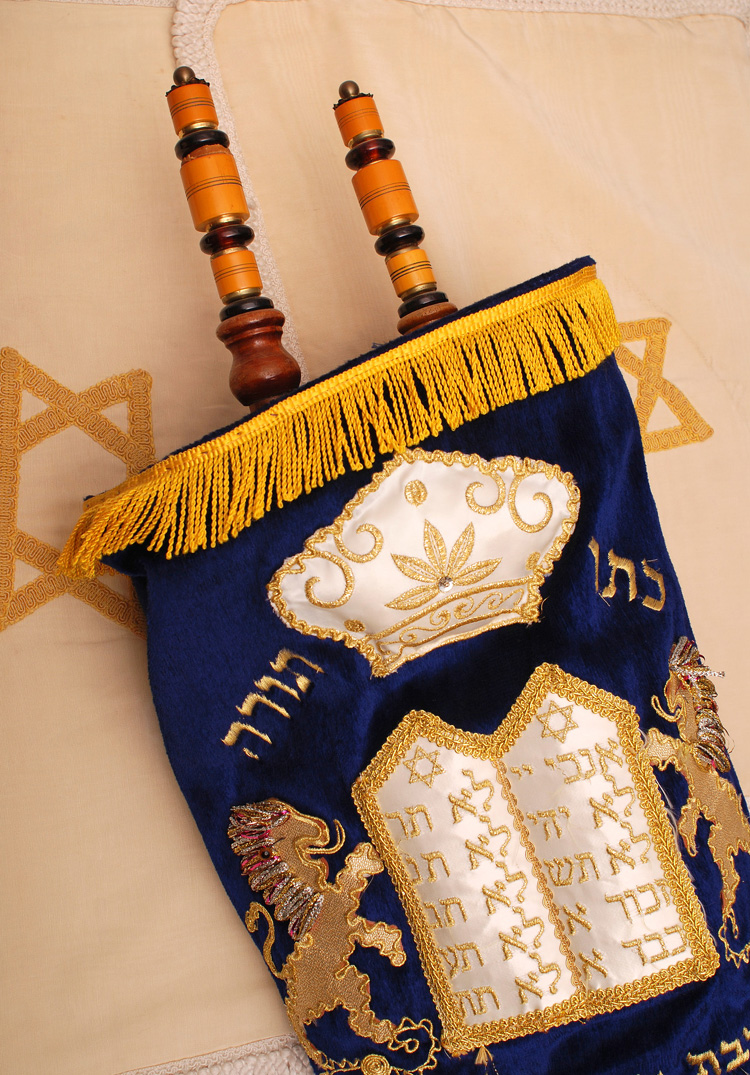
Abortion: A Biblical PerspectiveJewish torah scroll in cover

 James R. Aist

“Woe to those who call evil good and good evil, who put darkness for light and light for darkness, who put bitter for sweet and sweet for bitter.” (Isaiah 5:20)

Introduction

Although abortion has important social and political ramifications, to those of us who are born-again Christians, the most basic issues have to do with what God has to say about it. For that information, of course, we turn to the Word of God, the Holy Bible. But, can we find in the Bible the spiritual guidance we seek and get a clear understanding of the moral issues surrounding abortion, as well as God’s opinion of it? Let’s find out.

God Knows When Human Life Begins

Who could possibly answer this question better than the God who created human life, the God of the Bible? What does the Bible have to say about when human life begins?

Jeremiah 1:5 – “Before I formed you in the womb I knew you…” God knew Jeremiah before He formed him in the womb (i.e., before he was conceived). In the mind of God, Jeremiah existed as a human being even before he was conceived.

Psalm 51:5 – “Surely I was sinful at birth, sinful from the time my mother conceived me.” Let’s think about that for a moment. Could David have been sinful before he was a human being? Of course not; the curse of original sin applies only to human beings. It follows, then, that if David was sinful from the moment of conception, then he must also have been a human being from the moment of conception.

Luke 1:36 – “Now indeed, Elizabeth your relative has also conceived a son in her old age; and this is now the sixth month for her who was called barren.” Note that, here, the angel of the Lord states that what Elizabeth conceived was already a “son” (i.e., a male human offspring). The implication is that John the Baptist was already a human being at the moment of his conception.

Conclusion: In the mind of God, we exist as human beings even before we are conceived. Moreover, the Bible speaks of the product of human conception as being already “sinful” or a “son”, both of which are distinctively human attributes. Thus, in the Bible, human life is understood to begin at conception, because the God of the Bible says it does.

When Does God’s Plan for Our Life Begin?

Luke 2:21 – “And when eight days were completed for the circumcision of the Child, His name was called Jesus, the name given by the angel before He was conceived in the womb.” God’s plan for Jesus was already in place before he was conceived, as the name given by the angel, “Jesus”, means “Savior.”

Jeremiah 1:5 – “…before you were born I sanctified you; I ordained you a prophet to the nations.” God ordained Jeremiah a prophet before he was born.

Isaiah 49:1 – “Before I was born the Lord called me; from my mother’s womb he has spoken my name.” Isaiah received his calling from the Lord before he was born.

Judges 16:17 – “I have been a Nazarite dedicated to God from my mother’s womb.” Samson was dedicated to God as a Nazarite before he was born.

Galatians 1:15 – “… God… set me apart from my mother’s womb and called me by his grace…” Paul was set apart, by God, to be an Apostle before he was born.

Conclusion: According to the Bible, God has a plan for our lives before we are born!

Why Does the Bible Condemn Abortion As “Sin”?

First, we must understand that God created us, all of us, in His own image: “So God created mankind in his own image, in the image of God he created them….” (Genesis 1:27). This fact means that we human beings are the pinnacle of God’s creation and are the only living beings that bear the very image of God in themselves.

Second, God said that “Whoever sheds human blood, by humans shall their blood be shed; for in the image of God has God made mankind.” (Genesis 9:6). Abortion is undeniably the “shedding of human blood”, and as such it is an act of utter and total disrespect for the image of God himself, a grave offense to the very being of God.

And third, as the shedding of innocent human blood, abortion is the sin of murder and, therefore, a violation of God’s 6th Commandment, “You shall not murder.”

Conclusion: The Bible condemns abortion as sin, because it is murder.

Is It OK to Be “Pro-choice”?

“I have the right to do anything,” you say—but not everything is beneficial. “I have the right to do anything”—but not everything is constructive. No one should seek their own good, but the good of others. – 1 Corinthians 10:23-24

People who are “pro-choice” believe that they are just defending the right of the mother to decide whether her unborn child lives or dies; thus, “pro-choice.” At the same time, they deny that they have any responsibility for the death of the unborn child if the mother decides to abort. This is nonsense. By supporting their so-called  “right to choose”, you are, in effect, implying that you believe either choice, life or death, is equally good and moral, and to the extent that you influence them to agree with you, you share in whatever decision they make. Let’s be honest and realistic for a moment: Every time you say, “It’s a woman’s right to choose”, you’re also saying, “It’s OK to murder babies – either male or female – in the womb.” Do you really believe that a woman has a right to murder another woman in the womb? How does it promote “women’s rights” to deny unborn women the most basic human right of all, the right to live? And, what if the choice were up to you? Would you choose to murder your own baby in your womb? If not, then why would you support someone else choosing to do it? The only way you can avoid a shared responsibility in a decision to abort is to take a stand against abortion, i.e., to be “pro-life.” Does the Bible have anything to say about this point? Indeed it does. The Bible has stern rebukes and dire warnings for those who approve of sin or encourage others to sin (Leviticus 19:1; Isaiah 5:20; Malachi 2:17; Matthew 5:19-20; Matthew 18:6; Romans 14:22). Thus, anyone, including born-again Christians, who even approves of or encourages the sin of abortion in any way will, someday, have to answer to God for it. If that’s you, then now is the time to repent!

Conclusion: It is not OK to be “pro-choice”; according to the Bible, it is a sin.

An Appeal for the Rights of the Unborn

If you want to make me cry, then remind me of the accidental traffic death of my daughter, Liesel, when she was only 20 years old. Or, remind me of the accidental drowning deaths of twin toddlers in Knoxville a few days ago. But, if you really want me to weep and mourn deeply, then remind me of the intentional deaths of tens of millions of innocent, helpless, unborn babies, murdered in their mother’s womb, in America since Roe v. Wade. The United States will have no claim whatsoever to any moral high ground concerning anything, unless and until we, as a nation, rise up against this, the most despicable of man’s inhumanity to man, and legally declare it to be what it is: murder of the worst kind. And that’s why we need more and more pro-life justices, judges, governors, legislators, presidents and God-fearing voters to lead the charge against abortion. America, bless God and stand against this national tragedy!

Summary

According to the God of the Bible, human life begins at conception. God has a plan for our lives before we are even conceived, and abortion thwarts the plan of God. We are made in the image of God, and He condemns abortion as sin because it is murder, an act of utter and total disrespect for the image of God himself and a grave offense to the very being of God. And, it is a sin to be “pro-choice”, because a pro-choice position, in effect, approves of and encourages the sin of abortion, even though it is the mother who makes the decision.

You might also want to read this article by John MacArthur (click HERE)

(For more articles on ABORTION, click HERE)

A Poignant Parable of Progressive Purification

English: Firewood Español: Leños Français : Bo...A Poignant Parable of Progressive Purification

  James R. Aist

Introduction

A parable is usually understood to be made up of two parts: 1) a simple, down-to-earth story; and 2) a spiritual, moral or religious lesson derived from it. Undoubtedly, the most famous parables in the Christian world were those told by Jesus, who routinely and intentionally taught in parables. The personal revelations that I receive occasionally from God more often come in the form of a vision that conveys some kind of spiritual message or revelation, but many years ago one came to me by way of a real-life, real-time parable. It was about how God, through the working of the Holy Spirit within born-again Christians, goes about the process that we usually refer to as “sanctification”. I hope this story will bless you as much as I was blessed as God showed me this parable when I was smack dab in the middle of it.

The Setting

We were living in Ithaca, NY, at the time. Our home was located “in the country” on Snyder Hill Road, just three miles from the campus of Cornell University. I had the house built to my specifications so as to be inexpensive to heat during the much-too-long and hard upstate New York winters. Besides, we were going to heat the new house with wood, and I didn’t want to stack and fetch any more firewood than necessary during the frigid, blustery heating season. As it turns out, we only needed about one and one-half full cords of wood each winter, which is an amazingly small amount for that region. Nonetheless, every time I had a dump truck deliver a load of cut and split firewood and dump it in a huge pile about 30 feet from my garage, I had a big job ahead of me. The firewood had to be stacked in a neat row, roughly four feet high and as long as there was firewood left to stack.  It took me about three sessions of about one and a half to two hours each to finish the job, and it was hard, physical work, to which I was definitely not accustomed!

The Simple, Down-to-earth Part

Well, I had, for many, many years, stacked the pile of firewood into a neat and straight row and cleaned up the mess of firewood “trash” that remains on the lawn, and nothing out of the ordinary had ever happened. True to form, I had developed a routine for the tedious, but necessary, task of cleaning up the “trash” after the firewood was stacked. I would begin with the largest pieces, those that were too small to stack with the normal firewood but very easy to spot and gather into a box to use as kindling whenever I needed to build a fire in my wood stove. With those larger pieces removed, I could then more easily spot fragments of a smaller size and gather them into the box. And so on and so forth, until there was nothing left but tiny bits and slivers that I was not even aware of until all of the larger pieces had been removed. I would then rake together as many of these minuscule remnants as possible and deposit them into the trash. Finally — applying the concept of “good enough” — I would declare the project finished, even though, if I looked closely enough, there were still left even tinier fragments that I had not noticed before. Oh well.

The Spiritual Lesson Part

So, one crisp, spring day I was busy cleaning up the trash after stacking the firewood for the next winter. First the larger pieces, those that were easiest to see, then the next-largest pieces that were now, themselves, the easiest to see, and then the still-smaller pieces which had seemingly appeared out of nowhere when all of the just-larger pieces had been removed. Then, I paused briefly to rest and catch my breath. I was standing there, looking out over the “debris field” and thinking about how I could see the next-smaller pieces only after the just-larger pieces had been removed, when it hit me.  This is exactly how God cleans the sins out of our lives after we are born again! He begins by showing us the most conspicuous sins. These are the ones we are probably already painfully aware of, but have not yet dealt with for some reason. When these sins have been taken care of, it’s easier for Him to show us the less conspicuous sins, and we set about, together, to deal with those. And with those sins now out of the way too, it’s possible for us to see sins that we didn’t even know were there, and so on. Wow! I thought I was just was cleaning up the trash in my lawn, but God was showing me how He was cleaning up the trash in my life!

The After Word

Who would have ever imagined that such a simple task as cleaning up the trash left by a pile of firewood could produce a spiritual lesson of such magnitude?! But isn’t it just like God to teach us through the routine things of life, if we will just pause and meditate now and then?

(For more articles on BIBLICAL TEACHINGS, click HERE)

A Date with “Fate” at Eight

Rural ChurchA Date with “Fate” at Eight

James R. Aist

“I was found by those who did not seek me;
    I revealed myself to those who did not ask for me.” (Romans 10:20)

Introduction

I love to hear people tell the story of how God saved them. These stories all have some common ground, of course, but they are all different too, sometimes in interesting and amazing ways. Consider the range of salvation accounts recorded in the New Testament: an Ethiopian eunuch was saved through the one-on-one teaching of Philip (Acts 8:26-35); Simon the Sorcerer was saved through the public preaching of Philip (Acts 8:12); and Saul (later re-named Paul) was saved through the experience of a blinding light and piercing, convicting words from Jesus Himself while on the road to Damascus to persecute the Christians there (Acts 22:6-15). The details of the salvation experience in this day and age can also be far-ranging and fascinating. I know some who came to a gradual realization of the truth of the Gospel, which lead, ultimately, to an awareness that they believed in Jesus Christ, and others who had a sudden, miraculous experience that resulted in the immediate gift of saving faith. Now, regardless of how God brings you to the point of saving faith, you are just as saved as anyone else who gets to that point in life. My personal experience happens to be of the sudden, miraculous nature, and, if you will allow me to do so, I would like to share it with you now.

A Little Brown Church in the Vale…Well, Sort of

My family was Methodist, having moved from Maryland to Arkansas by way of Indiana. We lived on a working dairy farm in central Arkansas, and our house was located on a little dirt road off another dirt road, way “out in the sticks”. This very rural community was called “Cypress Valley”, because Cypress Creek ran through it. The houses were, generally speaking, at least a quarter-mile apart. Well, there was a little, wood-frame Methodist church located only about 75 yards from our front door, so that’s where we attended church, faithfully, every Sunday. Actually, the building itself was not really brown; it was more of a dull, gray color where the white paint was peeling off. Nor was it in a “wildwood”. But it was in a “vale” (which means “valley”). Well, that’s the venue, so on with the story!

An Old-timey Revival Is Coming to “Town”!

In the Summer of ‘53, the powers that be in the Cypress Valley Methodist Church decided it would be a good idea to invite an evangelist to come and preach a revival. Now, I was only eight years old at the time and had never heard of a “revival.” But I soon learned it meant that, during revival week, we would all be going to church not only on Sunday, but on the next three nights as well. That sounded to me like it would be the most excitement that we had seen in Cypress Valley since the dog came home from the creek bottom with swollen jowls from a snake bite! So, although I didn’t know what a “revival” was, I was looking forward to it, nonetheless.

A Date with “Fate”

Revival week came, and off to church we went. We would sing some hymns, have some prayer, listen to the evangelist preach, and then have an “altar call” for those who wanted to get saved. Up to that point, I knew nothing about being “saved” or that I even needed to be saved. Oh, I was aware that I had done some bad things – like lying and cussing and smarting off to my parents – but I was unaware that God would hold me responsible for my wrong doings, after my parents were done with me. I breezed through the first night of the revival, just taking it all in without thinking much about what was really going on. The second night, however, was different for some reason. When the evangelist began to preach, I found myself listening intently to what he was saying; it was as if he was talking to me, personally. He didn’t deliver a “hell fire and brimstone” message at all that night. Instead, he focused on how God loves me so much that he sent His only Son, Jesus, to sacrifice his life for my sins by dying on the cross for me. As he was explaining just how amazing such a love is, I had a “vision.” I first saw something like a dense fog or cloud that parted in the middle, then a soft and diffuse light appeared, and then I heard a voice speak into my mind and say something like, “What he is saying is true. You can depend on it. Believe it and do not depart from it, no matter what.” Then the vision went away, and I was so excited that I could hardly wait for the invitation to come forward and confirm what had just happened: God had saved me through a glorious vision and a message from heaven that validated to me – beyond any doubt — the evangelist’s message of God’s love that night! So, when the time came for the altar call, I was quick to go forward and let everyone there know that I had just believed in Jesus. We all rejoiced at the good news and went home. But I didn’t tell them the part about the vision and the voice; I was only eight years old, and I didn’t know what to make of it at the time.

But, now I realize just how perfectly my conversion experience exemplifies what the Bible says about salvation. “So then faith comes by hearing, and hearing by the word of God.” (Romans 10:17). “There are three that testify on earth: the Spirit, the water, and the blood…” (1 John 5:8); I heard the Spirit testify that night. And, I praise God that the word He sent out to me that night did not return to Him void, but accomplished His purpose (Isaiah 55:11).

(For more articles on BIBLICAL TEACHINGS, click HERE)