Spiritual Encounters With God: A Jonah Moment

Spiritual Encounters With God: A Jonah Moment

James R. Aist

“I called to the Lord out of my distress, and He answered me. Out of the belly of Sheol I cried, and You heard my voice.” (Jonah 2:2)

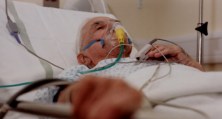
It was the second week of January, 2023, and I was in the hospital for a heart catheterization. If there was any serious arterial blockage, then they would install stents to open the arteries, as needed. My operation was scheduled for early morning, with the expectation that I would be able to go home the same day. However, something went terribly wrong, and I ended up spending the next nine days in the general hospital, followed by nine more days in the rehabilitation hospital. This encounter occurred while I was in the general hospital.

I was in the Intensive Care Unit for the first two days. During most of this time, I was either sleeping or hallucinating, but for brief moments I was awake and in touch with reality. It was during this time in the ICU that I had a very intense, but brief, encounter with God. I was in a place that was void of any light, so I couldn’t see anything. I was not even aware of my body. But, I could somehow sense the very close and real presence of God in front of me. Then a voice began to speak into my mind, describing to me the very dire situation I was in; that I didn’t understand what was happening to me or how serious it was, and that the doctors were doing everything they knew of to help me, but even they didn’t know what to do in order to pull me through. Then I focused my attention intensely on God. I very passionately described to Him how dire my situation was (as if He didn’t already know). I told Him that I don’t know how to survive this situation, and that the doctors don’t know either. And, I told Him that I know He is the only One who can keep me from dying, that He was my only hope to survive this ordeal. It’s fair to say that I made a very passionate and desperate plea for God to heal me and enable me to live on. To my knowledge, there was no response from Him at that time. With that, the encounter ended, and I lost awareness of anything for the time being.

After 18 days I was finally able to go home, and I have since made a full recovery. Subsequently, while my wife and I were studying the book of Jonah, it dawned on me that this experience in the hospital, while differing in most details, had a striking resemblance to the experience of Jonah in the belly of the whale (See Jonah 2:2, above). This fact confirms, to my way of thinking, that this encounter was, in fact, with God.

In retrospect, I believe that there are at least two take-home lessons for me here. First, I am immensely grateful to God for granting my request. And second, I am motivated to respond to this miracle by making good use of the time I have left to glorify God while I am still on this planet.

To read more of my articles on biblical topics,  click (HERE)

The Parable of the Mountain Laurel

The Parable of the Mountain Laurel

James R. Aist

As you may know, in the Bible, a parable is a story that uses well-known, common, everyday events or experiences to illustrate a spiritual truth or teaching. This parable took a couple of years to develop and several more years for me to discover. After I moved to Knoxville in 2004, I had new landscaping shrubbery planted in a straight row along the front of our house. Among the new shrubs were three Mountain Laurels, a species that is common in East Tennessee, both wild and domestic. At first, these new shrubs appeared healthy and vigorous, producing abundant growth with leaves of a deep green color and a few white, flowering wands. But, within a few years, things began to change for the worse.

These shrubs began to die off one at at time, one or two branches at a time. In each case, I would prune off the dead branches in hopes that the infection would not spread to the remaining branches, but, alas and alack, it always did. Once the first shrub was dead, I removed it in hopes that the infection would not spread to the adjacent shrub, but it did. This cycle was repeated until all that was left of the original three shrubs was one branch of the last shrub. This branch was healthy and green, but I couldn’t imagine how it could possibly develop into a fully and properly formed ornamental shrub, even if it were to remain healthy. Just when I was about to remove the last remnant of the three shrubs and start all over again, I decided to just let it stand until this last branch began to die, and then remove it. I was not going to be the instrument of demise of this last shrub while there was still life in it.

As time went by, I kept noticing that the last branch was remaining healthy and green. Soon, new, healthy branches began to grow from the good branch. It was then that I realized that this good branch had, somehow, escaped infection. As the years went by, more and more healthy green branches were added each year, until now, I have a large, healthy and beautiful Mountain Laurel growing in front of my house (see photo, above)! Had I given up on that last shrub while it had just that one healthy branch left, its potential would not have been realized.

So, what is the spiritual lesson in this parable of the Mountain Laurel? I believe it is that we should never give up on anyone who may seem to be beyond hope. I believe that this lesson applies not only to the salvation of the soul, but also to the healing and restoration of one who is seemingly lying at death’s door. In either case, it’s not over until God says its over, so let’s not give up on them too soon!

(To read more of my articles with a biblical theme, click HERE.)

Healing, Forgiveness and Demonic Indwelling/Oppression

See the source image

Healing, Forgiveness and Demonic Indwelling/Oppression

James R. Aist

“…God anointed Jesus of Nazareth with the Holy Spirit and with power, who went about doing good and healing all who were oppressed by the devil, for God was with Him.” (Acts 10:38)

The Bible is a remarkable resource of spiritual revelations that can rightly inform us of otherwise-hidden truths that can greatly affect our lives. This article focuses on a set of interconnected spiritual truths that, I believe, are not common knowledge within the mainstream of modern Christianity but are, nevertheless, important to our living as “more than conquerors.” (Romans 8:37). I will present three pertinent scriptural truths in bold lettering, followed by biblical references that support each one, respectively.

Demonic indwelling and infirmity are often causally related

Matthew 9:32-33. As they went out, they brought to Him a mute man possessed with a demon. And when the demon was cast out, the mute man spoke…”

Matthew 12:22. Then one possessed with a demon was brought to Him, blind and mute, and He healed him, so that the blind and mute man both spoke and saw.

Mark 9:17-27. One in the crowd answered, “Teacher, I brought You my son, who has a mute spirit. Wherever it takes hold on him, it dashes him to the ground. And he foams at the mouth and gnashes with his teeth and becomes rigid. So they brought the boy to Him. When he saw Him, immediately the spirit dashed him, and he fell on the ground and wallowed, foaming at the mouth. He rebuked the foul spirit, saying to it, “You mute and deaf spirit, I command you, come out of him, and enter him no more.” The spirit cried out and convulsed him greatly. But it came out of him, and he was as dead, so that many said, “He is dead.” But Jesus took him by the hand and lifted him up, and he arose.

Luke 4:40-41a. Now when the sun was setting, all those who had anyone sick with various diseases brought them to Him. And He laid His hands on every one of them and healed them. And demons came out of many, crying out, “You are the Christ, the Son of God!”

Luke 13:10-16. He was teaching in one of the synagogues on the Sabbath. And there was a woman who had a spirit of infirmity for eighteen years and was bent over and could not straighten herself up. When Jesus saw her, He called her and said to her, “Woman, you are loosed from your infirmity.” Then He laid His hands on her, and immediately she was made straight and glorified God. …should not this woman, being a daughter of Abraham whom Satan has bound these eighteen years, be loosed from this bondage on the Sabbath?”

Acts 10:38. “…God anointed Jesus of Nazareth with the Holy Spirit and with power, who went about doing good and healing all who were oppressed by the devil, for God was with Him.”

Forgiveness and healing occur together

James 5:15. “And the prayer of faith will save the sick, and the Lord will raise him up. And if he has committed any sins, he will be forgiven.”

Luke 5:17-25. Now some men brought in a bed a man who was paralyzed. They searched for ways to bring him in and lay him before Him. When they could not find a way to bring him in, because of the crowd, they went up on the roof and let him down through the tiles with his bed into their midst before Jesus. When He saw their faith, He said to him, “Man, your sins are forgiven you.” The scribes and the Pharisees began to question, “Who can forgive sins but God alone?” He answered them, “Why question in your hearts? Which is easier, to say, ‘Your sins are forgiven you,’ or to say, ‘Rise up and walk’? But that you may know that the Son of Man has authority on earth to forgive sins,” He said to the paralyzed man, “I say to you, rise, take up your bed, and go to your house.” Immediately he rose before them, and took up that on which he lay, and departed to his own house, glorifying God.

Something causes forgiveness and healing to occur together

I have yet to find direct, biblical evidence for this scriptural truth, yet I do believe that the evidence is in the Bible. For example, consider the case of an unbeliever who is indwelt by spirits of infirmity, and gets saved. This new Christian is instantly forgiven of all past sins (we call this “justification”) and is made the righteousness of God in Christ (2 Corinthians 5:21). The Holy Spirit then indwells the new Christian, and any previously indwelling demons will be cast out, because the Holy Spirit will not abide co-habitation of any evil spirits in the new believer (Psalm 5:4; 1 John 4:4). Thus, one may surmise that when the sins of a newly born-again Christian are forgiven, healing may follow because spirits of infirmity have been cast out. This is a causal relationship that would bind forgiveness and healing together, which is exactly what we were looking for.

To broaden this causal relationship to include all born-again Christians, one need only to remember that the born-again Christian is not indwelt by spirits of infirmity (because, that is impossible; see above), but only oppressed by them so as to cause infirmity. In this case, the evil spirits would not be literally cast out, but, instead, bound (i.e., expressly forbidden to continue oppressing the Christian and ordered to leave him alone. See Matthew 18:18).

Note that, in either scenario, forgiveness and healing occur together, because the influence of spirits of infirmity have been removed.

Practical Significance

To me, the Scripture passages quoted above clearly demonstrate that healing, forgiveness and demonic indwelling (or oppression) are variously interconnected. Knowing this can inform us how to best approach the task of ministering to people in need of healing. Of course, we should always be quick to lay hands on the sick and pray for their healing, believing that God can and will do it; He often does. But, leading a person to salvation can also be effective in bringing about healing, because forgiveness of sins (justification) is an essential component of the salvation work that God does in the new believer, and healing may follow. Finally, because evil spirits can cause various infirmities to manifest, it may be that, in order for healing to come, such spirits must first be either cast out or bound. We know that born-again Christians have both the authority and the power to minister in these ways, because Jesus said so: “These signs will accompany those who believe: In My name they will cast out demons; they will speak with new tongues; they will take up serpents; if they drink any deadly thing, it will not hurt them; they will lay hands on the sick, and they will recover.” (Mark 16:17-18). So, let’s be bold and use the God-given power and authority that we have as believers, and see what God will do!

Further Reading

Morris Cerullo. Receiving and Ministering Deliverance. (click HERE)

Derek Prince. Spiritual Warfare: Demons of Sickness and Infirmity. (click HERE)

(To read more of my articles with a biblical theme, click HERE)
Only Believe…What, Exactly?

See the source image

Only Believe…What, Exactly?

James R. Aist

But when Jesus heard it, He answered him, “Do not fear. Only believe, and she will be made well.”

Jesus told Jairus to not fear, only believe, that his daughter would be healed (Luke 8:49-50). Here, Jesus made it clear exactly what Jairus was to believe; namely, that God would heal his daughter. Not just that He could heal her or that He was just willing to heal her, but that He would actually heal her. In struggling to understand what a “prayer of faith” (James 5:16) looks like, I have found that there are three successive steps in our journey toward believing God fully for a miracle: 1) believing that God can do it; 2) believing that God is willing to do it; and 3) believing that God will do it. Having done that, the rest is up to God.

The first step should be relatively easy, for those of us who really believe that the Word of God is true. The Bible tells us that God created the entire universe in all of its vastness and complexity, and that He sustains it with His almighty power (Hebrews 1:3; Hebrews 11:3). It goes on to say that nothing is impossible with God (Luke 1:37) and that with God, all things are possible (Matthew 19:26). Both the Old Testament and the New Testament are replete with accounts of miraculous works done by God. Moreover, there are countless testimonies by reliable witnesses of miracles that God is doing in our generation. So, we can rest assured, based on the biblical witness and contemporary witnesses, that God is able to work the miracle that we need Him to work for us. We believe that God can do it.

The second step may be more problematic, however; is God willing to do it? This question gets to the heart of God’s attitude, purpose and desire for mankind, His heart toward us. We can see a man with leprosy struggling with this issue: “A leper came to Him, pleading with Him and kneeling before Him, saying, “If You are willing, You can make me clean.” Then Jesus, moved with compassion, extended His hand and touched him, and said to him, “I will. Be clean” (Mark 1:40-41). In fact, the New Testament has no record of Jesus refusing a miracle for anyone coming to Him believing He could do it.  And, the Bible clearly teaches that God’s attitude and desire toward us is to enable us to prosper (Deuteronomy 29:9; Psalm 1:3; Philippians 4:10). But, there are at least two well-known biblical accounts of God being unwilling to grant a prayer request: one is Jesus’s request for His Father to let the cup of suffering pass from Him (Matthew 26:39), and the other is Paul’s request for God to remove the tormenting messenger of Satan from him (2 Corinthians 12:7). God was surely grieved to see His Son and His servant suffering like this, but He had a reason for their suffering that far outweighed the gravity of their suffering: Jesus would save from hell all who would believe in Him (John 3:16-17), and Paul would be kept from becoming swell-headed by the torment inflicted by the messenger of Satan (2 Corinthians 12:7). God was able, but He was not willing, and for a good reason.

This brings us to the third step which is, for many, the most difficult, and, it is often the most complicated. Will God always do what He can do and is willing to do? The answer, I believe, is “No”, and I will tell you why I believe that. The following encounter with God occurred during the first week after I returned home from burying my 20-year-old daughter, Liesel, who had been struck and killed by a car (Click HERE). I was so stunned and emotionally numb from the events of that “week from hell” that I couldn’t even go to work. I just sat around in my recliner all day trying to process what had just happened. Now, I had never asked God why He had allowed anything bad that happened in my life, but this bad thing seemed too awful to cope with. So, one day as I sat in my recliner rehearsing the details of the past week, I began to wonder why God had not healed Liesel instead of calling her home. I was about to ask God “Why?” when suddenly the Holy Spirit stopped me from saying it. Then, God spoke into my mind saying, “You don’t need to know why, because you know Me well enough to know that I had a good reason.” To this day, I can only speculate as to why God did not heal my daughter. Jesus knew, and Paul learned, why God said no, but I was told to just trust that God had a good reason for telling me “No.” In all three of these situations, I believe that, in some way and at some level, God wanted to say yes, but at the same time He wanted even more to say “No”, for a good, a greater, reason.

That brings us now to the conclusion of the matter. I believe that we should always bring our cares, our concerns and our needs to God in prayer (1 Peter 5:7; Hebrews 4:16). And, I believe that we should always pray with the conviction that He can do it, that he is willing to do it, and that He will actually do it. Anything less, I believe, is an offense to the nature and the heart of God, an offense to who He is in relation to us. That way, God is always honored by the manner in which we present our request. And, if God says “No”, then we can rest assured He had a good reason for doing so, even if we never find out what the reason was. In truth, God does not owe us an explanation, regardless of how badly we want our answer to our “Why?” If we pray expecting God to hear our request and expecting that He will actually respond to it, then, I believe, we can expect the best possible outcome, whether or not it is the outcome we had in mind. The Bible says, “Trust in the Lord with all your heart, and lean not on your own understanding” (Proverbs 3:5). And remember, God always has a good reason; our God is a good, good God (Luke 18:19)!

(To read more of my articles with a biblical theme, click HERE.)