When Grace Is Not So Amazing

See the source image

When Grace Is Not So Amazing

James R. Aist

The Gospel of Jesus Christ calls us to a life of obedience and grace, not of rebellion and compromise!

“Grace” can be defined as receiving something good that we haven’t earned. It can be given by one person to another, and it can be given by God to anyone. Most notably, it is by the grace of God that sinners are saved from spiritual death (Ephesians 2:8), which is the penalty of sin (Romans 6:23). And this is what is so amazing about grace: that the penalty for our sins was paid by God’s only begotten Son, Jesus Christ, so that we may not perish (i.e., go to hell), but have everlasting life with God in heaven. For our part, God only requires that we believe in the One He sent, Jesus Christ, in order to receive this amazing grace (John 6:28-29). This is the real and complete Gospel of Jesus Christ in a nutshell, as summarized beautifully in John 3:16.

Sadly, false teachings and damning heresies concerning grace have crept into the Christian church. Something that is absolutely essential to the Gospel – the grave consequenses of sin – is being increasingly ignored or even denied in some of today’s Christian witness concerning grace. Many contemporary teachers and preachers are leaving sin out of their message of grace, yet calling it the Gospel. What they fail to understand is that where there is no sin, there is no need for grace. In such a scenario, grace would be neither amazing nor necessary.

At this point, I believe it would be helpful for me to provide some prominent and current examples of the kinds of “gospel compromises” I have in mind:

Abortion. Abortion clinics are being dedicated to God by clergy who claim that Jesus approves of them, whereas the Bible clearly teaches otherwise (click HERE);

Fornication. Unmarried couples living together are being given positions of prominence and leadership in some churches, whereas the Bible clearly teaches that they are not qualified (1 Timothy 3:1-7; 1 Timothy 3:8-13);

Foul language. Cursing, swearing and profanity are being practiced increasingly by some Christians, sometimes even by pastors, whereas the Bible instructs us to refrain from such misuses of the gift of language (Exodus 20:7; Matthew 12:35-37; Ephesians 5:4; James 3:10);

Homosexuality. Openly and actively homosexual people are not only being given positions of prominence and leadership in some churches, but they are conducting homosexual “weddings”, against all that the Bible says about the sanctity of biblical marriage and the sinfulness of homosexual sexual relations (click HERE).

Of course the grace of God is available for all kinds of sin, but God will not be mocked! When evil is called good and good evil (Isaiah 5:20), the grace of God does not flow, and sin remains. Moreover, if we cherish sin in our heart, God will not hear us when we call out to Him (Psalm 66:18), and that is not a good place to be in! The true Gospel of Jesus Christ calls us to a life of obedience and grace, not of rebellion and compromise! And if you are wondering if obedience really fits in here, remember that Samuel said to Saul, “Does the Lord delight in burnt offerings and sacrifices as much as in obeying the voice of the Lord? Obedience is better than sacrifice, a listening ear than the fat of rams (1 Samuel 15:22).” And .Jesus said, “If you love Me, keep My commandments” (John 14:15). The grace of God does not make obedience optional!

So, here is the fatal flaw in such perversions of the true Gospel of Jesus Christ: all have sinned and come short of the righteousness that God requires (Romans 3:23). Mankind has a “sin problem” that must be dealt with effectively before the grace of God that brings eternal life is even available. The grace of God (manifested by forgiveness) comes into play only after we have confessed our sins (i.e., we have agreed with God that what we did is a sin) and repented of that sin (i.e., solemnly resolved to not repeat it). God has offered us no other way to restore a right relationship with Himself. And when we confess our sins and repent, He is faithful and just to forgive our sins and cleanse us from all unrightneousness (1 John 1:9); faithful, because He promised to forgive, and just, because Jesus has already paid the price for our sins. Those who preach and teach a gospel that ignores or denies the sin problem (or specific sins) are not presenting the real Gospel of Jesus Christ, but a perverted counterfeit of it (2 Corinthians 11:4). The sad result is Christian churches that are becoming more like the secular world instead of more like Jesus.

The true Gospel of Jesus Christ begins with the bad news of our sinfulness and ends with the good news of God’s forgiveness of our sins. What many don’t realize is that it is the grace of God that brings both the bad news and the good news. The following phrases in the beloved hymn, Amazing Grace, state this truth wonderfully, “’twas grace that taught my heart to fear, and grace my fear relieved.” Moreover, Jesus gave us an example of God’s grace bringing first the bad news and then the good news to the woman at the well (John 4:4-42). The bad news was that she had 5 ex-husbands and was currently shacking up with another man out of wedlock. Once He got her attention with those Words of Wisdom concerning her sinful ways, He was able to then move on effectively to the good news that He had for her, and many were saved because of her testimony.

Before I close, I would like to share with you a vision God gave me that reveals His heart toward people who are among the “down and out” of our society. I was sitting in my car one day, waiting for my wife to finish having her hair “done.” Along came what appeared to be a homeless man. His clothing was dirty and tattered, his head was down and he had a slow, plodding gait, as one defeated by life. As I watched him pass in front of me, suddenly his form became somewhat transparent and another man’s form was superimposed upon his. This other man was clean, well-dressed and walked with his head held high. After they had taken a few steps in unison, the image of the second man disappeared, and then I saw just the homeless man as he walked out of sight. For just a few moments, God had given me a glimpse of who He saw walking in front of me: not a disheveled, defeated and hopeless man, but a happy, successful man full of hope, the kind of man God wanted him to be! Then I received the interpretetion (i.e., the message) of the vision: There, but for the grace of God, go I!

When we speak of God’s grace to someone, let’s be sure not to water it down by compromising what it really is. When sin is at issue, tell them that God’s grace brings first the conviction of sin, and then, following confession and repentance, the forgiveness of sin. Anything less than that is not really God’s grace, and it is not amazing at all. So let us always be obedient to this instruction from the Apostle Paul: “Do not be conformed to this world, but be transformed by the renewing of your mind, that you may prove what is the good and acceptable and perfect will of God.” (Romans 12:2)

(To read more of my articles with a biblical theme, click HERE)


The Reverse of the Curse

See the source image

The Reverse of the Curse

James R. Aist

God has been impressing on me lately the incredible magnitutide of what He has already done to bridge the spiritual gap between Himself and mankind that began when Adam chose to obey Satan instead of God in the Garden of Eden (Genesis 3). God’s response to that “original sin” was three-fold: 1) He pronounced curses on Adam, Eve, Satan and all of creation; 2) He drove Adam and Eve from the Garden so that they could no longer eat of the tree of life and live forever; and 3) He severed the spiritual connection into which He had created Adam and Eve in the first place. The latter is the spiritual gap that original sin caused, and I want to focus here on the extent to which God has already bridged that gap, how incredibly far God has gone to more than restore our former spiritual connection with Him. To do that, I will focus on God’s presence as manifested by the Holy Spirit.

Before sin entered into the world, it was just Adam, and Eve and God; He was their God, and they were His people, one might say. Once sin entered in, however, He was no longer their God, and they were no longer His people. This spiritual disconnection between God and mankind persisted from generation to generation, with God dwelling only with or among His people, keeping His distance, as it were.  But, God did promise that the day would come when He would be their God and they would be His people again (Jeremiah 24:7), as it was in the Garden of Eden before sin entered the picture.

So, in the fullness of time, God sent His only begotten Son, Jesus Christ, to spiritually reconnect (i.e., reconcile) mankind with Himself. But God went much farther than merely re-establishing the former spiritual connection. At Jesus’ request, God sent the Holy Spirit to actually dwell within each person who would receive Him as their Lord and Savior, thus fulfilling the prophecy of Ezekiel 36:27! Never before had the spiritual connection between God and His saints been either this intimate or this powerful, although God was within the Old Testament prophets when they prophesied (1 Peter 1:10-11). Now, all who believe in Jesus have within them the same power that raised Jesus from the dead (Romans 8:11)! Moreover, the fact that God would place the Holy Spirit within each new believer is proof positive that He has, in fact, made us to be “the righteousness of God in Christ (Romans 3:22).” Otherwise, we would not be morally fit for co-habitation by the Holy Spirit (Psalm 5:4)!

Now, let’s pause for a moment to summarize: God was with Adam and Eve in the Garden of Eden; God was with the Isrealites in the wilderness as they followed Him around for 40 years; God dwelled among the Israelites in temples built in the Promised Land for His presence; God was momentarily within at least one prophet when he was prophesying (Ezekiel 2:2); when Jesus came, God dwelled among men for 33 years and the spiritual connection with the Father was re-instated; but, when the Father sent the Holy Spirit to believers, for the first time ever God dwelled within men permanently. “Why is that such a big deal?”, you may ask. Its primarily because the Holy Spirit within us is a God-given guarantee that we will, for sure, always have eternal life (Ephesians 1:14)! Our salvation has been sealed by the Holy Spirit within us (Ephesians 1:13).

At the beginning of this article, I pointed out that God’s response to Adam’s “original sin” was three-fold, and, so far, I have dwelt on only the third response. But the Bible tells us that God will re-create the kind of utopian scenario that existed in the Garden of Eden before sin entered the world, and that we will be together with God once more on a renewed earth, where we will reign with Jesus forever. In the meantime, let’s remember that God has already done more than merely remedy our spiritual separation from Himself: His Spirit now dwells within us! God sure knows how to more than “reverse the curse”, doesn’t He?

(To read more of my articles with a biblical theme, click HERE)

Where Will Christians Really Spend Their Eternity?

See the source image

Where Will Christians Really Spend Their Eternity?

James R. Aist

“And if I go and prepare a place for you, I will come again and receive you to Myself, that where I am, you may be also.” (John 14:3)

I don’t know about you, but somehow I got the impression years ago that when we Christians die and go to heaven, our permanent residence will be in heaven with Jesus, not here on this earth. It would be as if our death would amount to a one-way ticket from earth to heaven, somewhere out in the vastness of the cosmos. Perhaps singing “This world is not my home, I’m just a passin’ through” may have had something to do with this perception. Or maybe it was “Won’t it be wonderful there” or “I’ll fly away“; hymns about being away from this earth and with Jesus in heaven (somewhere else) forever. And its true: when we die, we will go to be with Jesus in heaven forever. But, that’s only part of the story of our journey from earth to our final destination. The rest of the story is, arguably, even more glorious and exciting than the beginning. Let me explain.

This journey of mankind began, of course, when God created Adam and Eve and placed them into the Garden of Eden. God was with them there, and their future would have been life everlasting with God on the earth. But, through the temptation of Satan’s lies, sin entered in and brought with it a spiritual separation of mankind from God (i.e., spiritual death). And that’s the way it was for thousands of years; Satan appeared to have been successful in destroying God’s utopian plan for mankind on the earth. Now the only way for mankind to dwell forever with God was to believe in God (and His promised Messiah), die, vacate the earth and go to heaven, where God was.

There was just one problem, however: the “sin problem.” And Satan knew it. He thought he had succeeded in permanently separating mankind from God spiritually. But God had a solution to this sin problem all along. So, in the fulness of time, God sent His only begotten Son, Jesus Christ, to die for our sins, so that we would not end up in hell, but have everlasting life with God in heaven. That’s fantastic, wouldn’t you say?

But wait. As things stand now, Satan still has succeeded in separating mankind from their rightful, God-given home; namely, planet earth. So here’s where it gets really exciting. When God gives the signal, Jesus will return to the earth with us and defeat Satan and all other evildoers. Then, He will set up His eternal kingdom where? Right here on a renewed planet earth, where it all started! From that time forward, God’s victory over Satan will be complete; we will have returned with Jesus to reclaim the earth as our permanent residence! So its really a round trip, you see. We win, and Satan loses!

(To read more of my articles with a biblical theme, click HERE)


Why Doesn’t God Follow His Own Laws?!

See the source image

Why Doesn’t God Follow His Own Laws?!

James R. Aist

“But our God is in the heavens; He does whatever He pleases.” (Psalm 115:3)

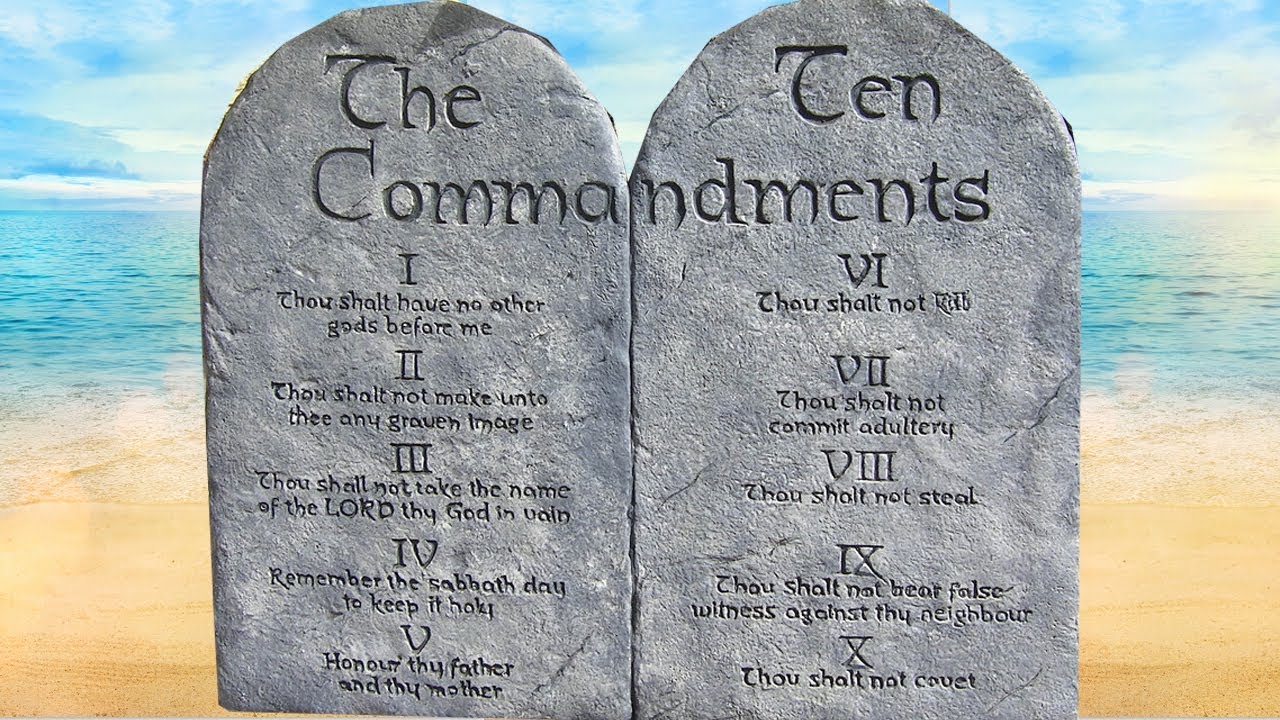
Many people want to believe that what the Bible says about God is true, but they will do so only insofar as it conforms to their pre-conceived notions and/or they are willing to accept it as being true. Consequently, they believe in a god that is, at least to some extent, created in their own image. One major stumbling block for many such folks is the fact that God doesn’t always follow the laws that He commands us to follow. For example, in the Ten Commandments (Exodus 20:1-17), God has commanded us to not murder or steal, but He killed all the firstborn children in the land of Egypt (Exodus 13:15) and struck dead a Christian married couple (Acts 5:1-10), and, in effect, He stole the land from the inhabitants of the promised land and gave it to His chosen people, the Israelites (Leviticus 20:24)! So, they reckon, God is breaking His own laws and is, therefore, not the perfect moral being He claims to be. This leads them to the conclusion that such a god is a scofflaw, and therefore not worthy of reverence and obedience, much less worship.

But, there is a fatal flaw in that way of thinking about the God of the Bible. God’s laws were given to mankind for mankind to follow, not necessarily for God to follow. The God of the Bible is the supreme judge of what is right and what is wrong. There is no authority above God to whom one can appeal in order to lodge a valid accusation against God. Moreover, there is no need of someone to judge God, because all of His ways and thoughts are perfect. The psalmist stated it succinctly for us: “But our God is in the heavens; He does whatever He pleases” (Psalm 115:3). God is not subject to the laws He has given for mankind to follow. Rather, He does whatever He pleases. God’s perfect ways flow from His perfect, moral nature, whereas our imperfect ways flow from our imperfect, sin nature. Moreover, God forbids us to do some things that He does, even in those instances in which we are capable of doing so. For example, Paul states emphatically,”Beloved, do not avenge yourselves, but rather give place to God’s wrath, for it is written: “Vengeance is Mine. I will repay, says the Lord” (Romans 12:19). Judgement, in the sense of condemnation of a person, is another thing that God reserves for Himself. And, we can add the definition of right and wrong to this list. So, you see, God does not follow all of the laws that He laid out for mankind to follow, because He has reserved some functions and actions for Himself alone. He can do that, because He is God and we are not. We would do well to remember that.

The God of the Bible created, and therefore owns, all of creation, including us. He created us for His glory (Isaiah 43:7), in order for us to reflect back to him His glory (click HERE). Therefore, He has every right, even a moral obligation, to reward good and punish evil, as well as to be the sole judge of what good and evil are. And, He does with each human life whatever he pleases, without reproach. We can see this clearly in Romans 9:18, where Paul writes, “Therefore He has mercy on whom He wills, and He hardens whom He wills.”

So, whenever we accuse the God of the Bible of wrongdoing, we are deluding ourselves into thinking that we are morally superior to God and are, therefore, qualified to be His judge. But in reality, its the other way around: we will all be judged by God.  So let’s not judge Him because He doesn’t follow all of the laws He has given for us to follow. Rather, let’s make peace with the fact that as the heavens are higher than the earth, so are His ways higher than our ways, and His thoughts than our thoughts (Isaiah 55:8-9). This is the God of the Bible: morally perfect, beyond reproach and judge of all.

(To read more of my articles with biblical themes, click HERE)