On Tithes, Offerings and Psalm 50

See the source image

On Tithes, Offerings and Psalm 50

James R. Aist

“Each of you should give what you have decided in your heart to give, not reluctantly or under compulsion, for God loves a cheerful giver.” (2 Corinthians 9:7)

I don’t know if you are aware of it, but there is an ongoing debate as to whether or not the Old Testament practice of “tithing” applies to the New Testament church, that is, to you and me. I used to believe that it does, and, in the past, I have referenced Malachi 3:8-10 in support of that viewpoint while soliciting, as a Pastor, “tithes” and offerings during church services.

Later on, I began to question this practice and conducted my own research into the matter, starting with the Old Testament. Here are the most pertinent points from that investigation: 1) the “tithe” in the Old testament was God’s way of providing for the priests, who had no land inheritance from which to make their own living; 2) this “tithe” was one-tenth of the increase from the harvest; and 3) the “tithe” was not optional, but compulsory, both in the amount and the timing. In fact, it was so compulsory that God said that if one did not pay the full amount at the designated intervals, one was robbing God (Malachi 3:8-10)! That is a most serious and solemn indictment, and it was a non-negotiable requirement of the system of tithing before Jesus came on the scene.

Then I moved on to the New Testament, where I came to realize the following: 1) the “tithe” is mentioned in the New Testament (Matthew 23:23), but as a requirement for Jews, not Christians; 2) instead, we are told to give according to our means, whatever amount we purpose in our own hearts, and to do so cheerfully and without compulsion (1 Corinthians 16:2; 2 Corinthians 8:10-12 and 9:7). Moreover, we are instructed, “On the first day of the week let every one of you lay in store, as God has prospered him, so that no collections be made when I come” (1 Corinthians 16:2). Here again, we see instruction to give according to our means, but also to set aside our “increase” so that it will actually be available to give freely when the time comes, without having to be asked for it! That is good stewardship of our finances.

These instructions for “giving” bear little resemblance to the Old Testament system of the “tithe.” In my opinion, if “tithing” was to be a carry-over from the Old Testament, then the New Testament would have made reference to it concerning Christians, especially gentile Christians. But, it does not. When Jesus came, He ushered in a new and a better system of giving, one based not on compulsion, but on willing, “thankful hearts” (cf. Psalm 50:14-15). Where hearts have been changed by Jesus, giving is not a duty, but a blessing (Acts 20:35) and a privilege, and a sign of faith in God’s provision (Philippians 4:19)! In my opinion, it is inappropriate to invoke the Old Testament tithing system to coerce, as it were, giving by Christians. That amounts to giving with, not without, compulsion. That said, giving one-tenth of your increase to the Lord is the only mathematical formula in the Bible as a target amount for giving, and that seems to me to be a reasonable, minimal target for the New Testament church.

While I’m on the topic, there are several other issues I have concerning how “tithes” and offerings may be wrongly solicited. First, it has become an occasional practice, in some Christian circles, to declare that “God doesn’t need your money”, just before asking you to give Him your money! That makes no sense at all to me, zero. Then, Psalm 50:7-13 may be cited to lend biblical support to the idea that God doesn’t need your money. The problem here is that there is not one word in these verses concerning the giving of “tithes and offerings”; it is only about “ritual sacrifices and burnt offerings”, which is a whole different matter. So, does God need your money? The answer to this question is both “No” and “Yes.” For God to exist and function as God, it is true that He does not need our money, as Psalm 50:9-13 clearly implies. But, for the Great Commission (Matthew 28:18-20) to be accomplished, He does need our money, by His own design; enlisting us to get it done requires money, and lots of it. The second issue I have in this context has to do with trying to purchase the blessings of God with an offering. If you are admonished to “not come to the altar ’empty handed’ if you expect to receive a blessing from God”, then you may want to just keep your money and leave. God already wants to prosper us (Psalm 35:27), and He is not in the extortion business! And third, I believe it is a mistake to pronounce a “pass” on giving to those who are barely able to make ends meet just to break even at the end of the month. Why? Because God has promised to reward everyone who gives with more than they have given (Luke 6:38). So, when you excuse the poor from giving – even a small coin that they really can do without – you are getting in the way of a blessing of increase that God wants to provide for them also. After all, they are the very ones who need such an increase the most, are they not?

(To read more of my articles on biblical topics, click HERE)

The God of “New Things”

See the source image

The God of “New Things”

James R. Aist

“Do not remember the former things nor consider the things of old. See, I will do a new thing, now it shall spring forth; shall you not be aware of it?” (Isaiah 43:18-19a)

The more I study the Bible, the more I am impressed with the value and importance of gaining a greater perspective on the nature and ways of God. Isaiah wrote, “For My thoughts are not your thoughts, nor are your ways My ways, says the Lord. For as the heavens are higher than the earth, so are My ways higher than your ways, and My thoughts than your thoughts” (Isaiah 55:8-9). My belief is also that God’s ways are higher than our thoughts. Throughout the history of mankind, from the Garden of Eden until now, God has been at work doing things that He has never done before, things that mankind has never heard of before, things that mankind could not have even imagined He might do. These “new things” always surprise us, but God has His entire plan in His mind already, for He declares the end from the beginning (Isaiah 46:9-11). The purpose of my writing this article is to demonstrate that the God of the Bible is, in fact, the God of “new things”, that He has already done many “new things”, that He is doing “new things” now, that He will continue to do “new things”, and that we need not be afraid to embrace and participate in these “new things.” In fact, God characteristically invites us to join Him in some of the “new things” He is doing today. Now, let’s take a brief look at some of these “new things”, in order to gain a clearer perspective on this important characteristic of our God.

First, let’s consider a few of the “new things” that God has already done, beginning with the Old Testament:

  • God creates Eve from Adam’s rib (Genesis 2:21-22);
  • God sends “bread” from heaven (Exodus 16:11-35);
  • God makes water gush from a rock (Numbers 20:11);
  • A burning bush is not consumed (Exodus 3:1-4);
  • A donkey speaks (Numbers 22:28);
  • A snake on a stick is used to heal snake bites (Numbers 21:8-9);
  • City walls suddenly tumble down under their own weight (Joshua 6:5).

Next, let’s have a look at some more of God’s “new things”, as recorded in the New Testament:

  • Jesus is conceived by the Holy Spirit, rather than by a man (Luke 1:35);
  • Two men walk on water (Matthew 14:25-26);
  • God the Father raises Jesus from the dead, without human involvement (Galatians 1:1);
  • The Holy Spirit begins to indwell believers as they are saved (Ezekiel 26:27, Ephesians 1:13-14, 1 Corinthians 12:13, 2 Corinthians 1:21-22, 1 John 4:13-15);
  • The Holy Spirit is, henceforth, poured out on all people, not just a few Prophets (Acts 2:17);
  • Items of Paul’s clothing bring healing and deliverance, from a distance (Acts 19:12);
  • A coin from a fish’s mouth is used to pay the tax (Matthew 17:27); and,
  • Mud made from spit and dust is used to restore a man’s sight (John 9:5-7).

Finally, here are some of the “new things” that God will do in the future:

  • Jesus will come again, in the air, to gather the saints to Himself (1 Thessalonians 4:13-17);
  • Evildoers will be cut off and banished to the Lake of Fire forever (Psalm 7:9; Revelation 19:19-21; Revelation 20:10, 14-15);
  • God will create a new heaven and a new earth (Isaiah 65:17; Isaiah 66:22; 2 Peter 3:13; Revelation 21:1-5); and,
  • God will make all things new (Revelation 21:5).

Do not fear, Only Believe

As you can see, the God of the Bible is, manifestly, the God of new things. In fact, everything God has ever done regarding mankind was a “new thing” at some point in history! So, when you encounter a supernatural manifestation, remember that it may really be of God, no matter how strange or bizarre or unnecessary it may seem to be. His ways are higher than our thoughts, and its just like God to do something that is new to us. By all means, test it to see if it is of God (click HERE), and if it is, then don’t be afraid to embrace it. After all, that’s what Jesus would do (John 5:19)!

After Words

Please don’t misunderstand, and assume that I am saying that God will do only “new things” going forward; I am not. Of course He will continue to do many of the things that He has done in the past. For example, God will always be faithful and just to forgive our sins (1 John 1:9), the Father still draws sinners to Jesus (John 6:44), God still works in the saints to will and to do His good pleasure (Philippians 2:13), and Jesus still baptizes believers in the Holy Spirit (Mark 1:8). God Himself does not change (Malachi 3:6), and Jesus Christ is the same yesterday, today and forever (Hebrews 13:8). But, He is not confined to doing in the future only those things that He has done in the past. To believe otherwise is to put God in a box, and such a god is not the God of the Bible.

(To read more of my Bible-themed articles, click HERE.)

The Parable of the Prodigal Sheep

The Parable of the Prodigal Sheep

James R. Aist

Perhaps when you read the title of this article you thought to yourself, “Doesn’t he mean the lost sheep?” After all, that’s the way the later-added, extra-biblical headings refer to this parable. And, in my experience, this parable is commonly used to refer to God pursuing unbelievers until they have been drawn all the way to saving faith in Jesus Christ. Indeed, God does exactly that (John 6:44), but is that what this particular parable is really about? Let’s take a closer look, and find out.

Jesus said, “What do you think? If a man has a hundred sheep and one of them goes astray, does he not leave the ninety-nine on the hills and go in search for the one which went astray? And if he finds it, truly I say to you, he rejoices more over that sheep than over the ninety-nine which never went astray. So it is not the will of your Father who is in heaven that one of these little ones should perish” (Matthew 18:12-14).

Notice that the scene opens with the man actually owning 100 sheep. If he has them, then he owns them; these sheep belong to this man. Moreover, if this man did not already own these sheep, then none of them could actually go astray, because the man would have no rightful claim to them in the first place. So, right away, we can see that this is a parable about, not a wild sheep belonging to no one, but a prodigal sheep belonging to the man.

Having this perspective, then, let’s proceed to what I believe to be the correct spiritual meaning of this parable: It is not the will of your Father who is in heaven that one of these little ones whom the Father has given Me (John 10:29) should perish. Jesus is the man in the parable. Now we can see that the parable of the lost sheep is really about the Father pursuing a backslider that He has already saved until he is brought back into the lifestyle and fellowship of the saints who are following Jesus. And, that is exactly why He will raise all of them up on the Last Day (John 6:39), not just the ones who didn’t backslide!

Now, if you will indulge me for a few moments more, I want to make a point of comparison. If you will take a look at the parable of the prodigal son in Luke 15:11-28, you will see that it begins in a fashion similar to the parable of the lost sheep: “A man had two sons.” They were his sons throughout the parable, and when the prodigal son returned to his father, he was reinstated, not adopted, into his father’s household. Although these two parables differ in detail, there are many parallels. Perhaps now you can better understand why I chose to say “prodigal sheep” in the title of this article.

(To read more of my articles with a biblical theme, click HERE)

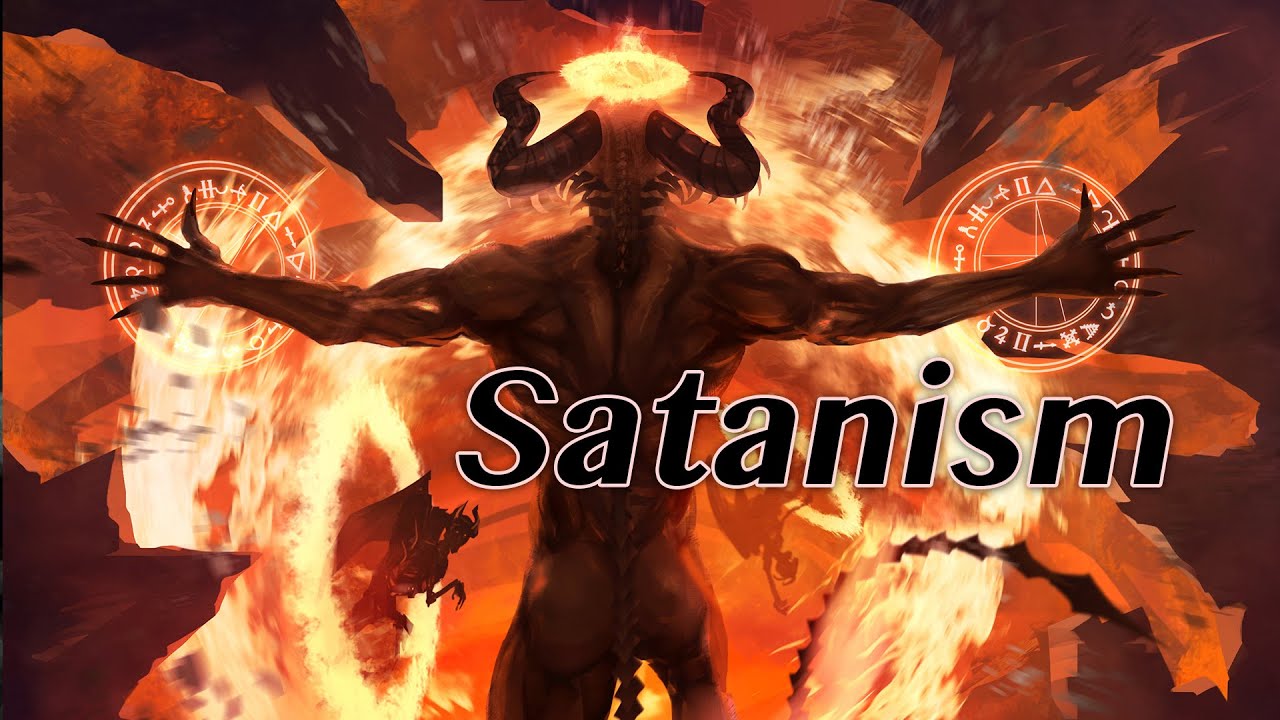
The Faith of Demons Won’t Help You At All!

See the source image

The Faith of Demons Won’t Help You At All!

James R. Aist

“You believe in God. Believe also in Me.” – Jesus (John 14:1b)

There seems to be some lingering confusion among some who claim to be Christians about whom one has to believe in to be a genuine, born-again Christian. For example, some say of their conversion experience, “I found God.” Others may confess their Christian faith by saying “I believe in God.” And surely one must believe in God the Father to be saved. But, does belief in only God the Father really fulfill the requirements for salvation recorded to the Bible?

According to Jesus, one must believe not only in God the Father, but also in Jesus, His only begotten Son (John 3:16, John 6:29 and John 14:1b) to fulfill God’s requirements for salvation. But its not that simple, because even the demons believe in God and that Jesus is His Son (James 2:19; Matthew 8:9; Luke 4:41a), and yet they are condemned to hell. What, then, is missing from the faith of demons?

The answer lies in the fact that there are two kinds of “belief”: there is mere mental ascent to the fact that Jesus is the Son of God, and there is mental ascent along with surrender to the lordship of the Son of God. The faith of Demons is the former kind, because Satan is their lord, whereas saving faith – the faith of true believers – is the latter kind, because Jesus is their Lord. Jesus said, “Not everyone who says to Me, ‘Lord, Lord,’ shall enter the kingdom of heaven, but he who does the will of My Father who is in heaven” (Matthew 7:21), and “You believe in God. Believe also in Me” (John 14:1b). As James pointed out, “So faith by itself, if it has no works, is dead” (James 2:17); dead faith is the faith of demons and will not solve your sin problem.

So, if you have not yet surrendered yourself to the lordship of Jesus Christ, then you have the faith of demons, and you need to take care of that right away. Jesus is not your Savior if He is not your Lord!

(To read more of my articles on Bible topics, click HERE.)